Artists

Curators
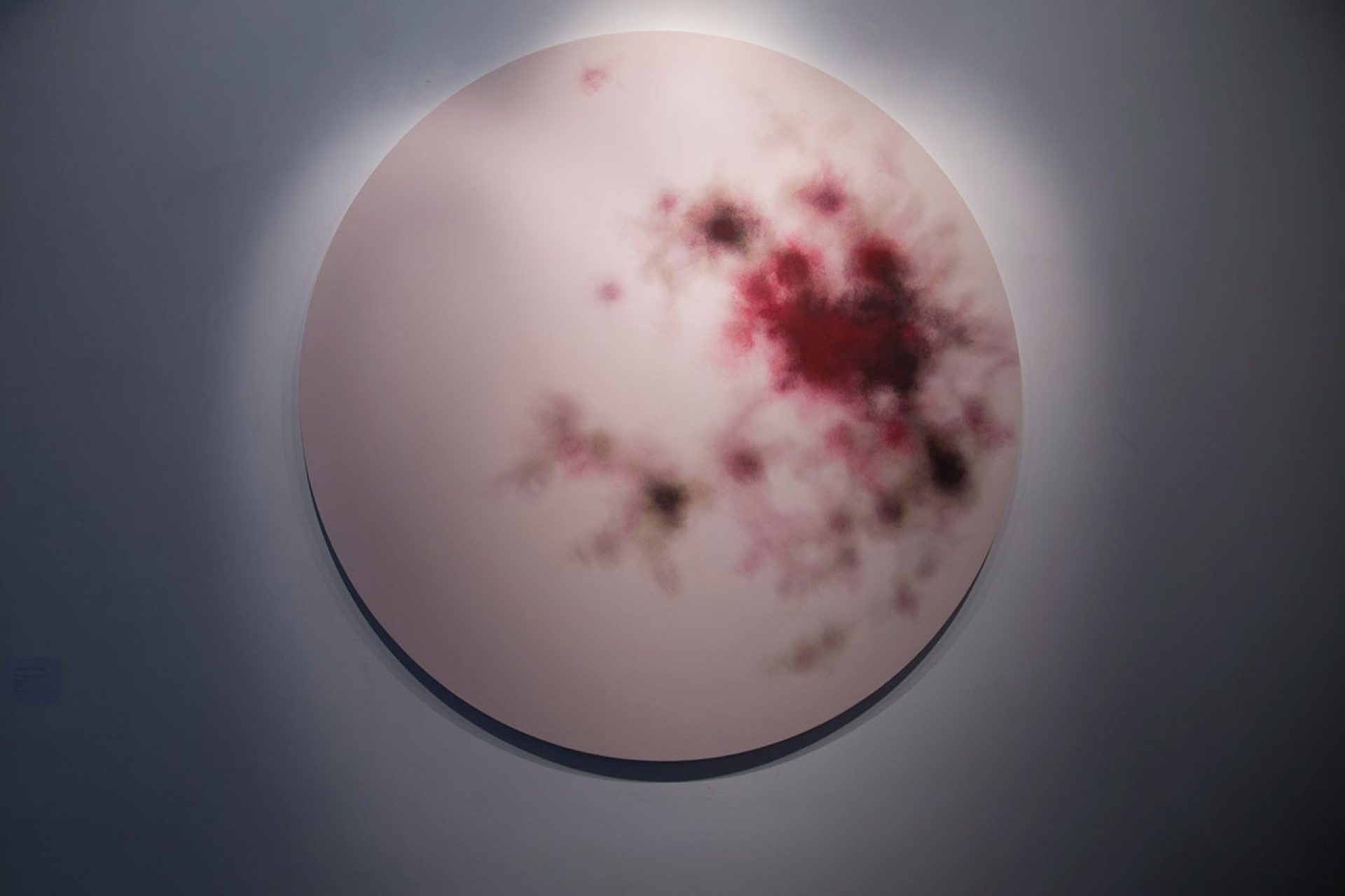
As in the curatorial analysis of the previous artist’s work (Guendalina Urbani, who, I recall, selected the artist currently on display, Andrea Frosolini), here too I would like to separate two distinct characteristics of Frosolini’s work. The first and most important, to which I will devote greater attention, is the emotional-vital enrichment that each of the circular paintings exerts on us, on the viewer. The second concerns an analysis of the conceptual and technical nuances of the work, such as the apparent paradox—later resolved—of creating a painting that is both abstract and figurative.
Although these latter aspects are certainly interesting and important for a deeper understanding of an artwork, the focus of this curatorial analysis must necessarily be, as mentioned earlier, the capacity of the work to enliven the viewer—an idea that will become clearer later. This can occur in many ways, including, as in this case, sensory stimulation. Gentle yet intense brushstrokes of warm, enveloping color define sensations on the wooden surface. The thick patches of paint immediately strike our taste buds, and we feel their sweet violence, we savor it. At the same time, the misty softness of the shading invades our sense of smell.
It seems possible to touch and grasp those bruised bodies the artist consciously portrays and subtly allows us to perceive. The viewer is carried through a rising emotional and sensory crescendo that leads to the ecstatic feeling of having solved a riddle, of being alive, of being pure emotion. What we initially perceive as abstract paintings subconsciously take shape—through all the sensory stimuli described—as actual bruised bodies. This is the point: what Frosolini could have presented straightforwardly as a hyper-realistic depiction of bruises is instead offered hidden, challenging us to perceive it through sensory intuition.
And here lies the abstract-figurative paradox previously mentioned. A work presented as abstract is in fact perceived as figurative through simple sensory and emotional intuition. All that is required to experience this exhibition is to surrender oneself.
Giovanni Damiani
