Works on display
Artists
Curators

360
Art, like life, is a constant struggle between something that wants to emerge and something that wants to disappear, sink, hide from the view of others and especially from our own awareness. Working with the spirit of a researcher means constantly living this conflict. Research means venturing confidently into the darkness of uncertainty, trying new solutions, suspending all prejudice, inhabiting an intermediate space where one risks confusion, questioning acquired knowledge, and accounting for paralysis, perplexity, and deception. In this sense, research means chasing a shadow, an emerging form that while manifesting negates itself, wants to become distortion, an undefined blot. For this, it is necessary to have martial discipline, to relate the unknown to the known, to live in a space where one cannot foresee which connections will come into play, or what failures await around the corner.
The work of the artist, like that of the monk and the scientific researcher, is a private and secret endeavor that to the world has the taste of a radical and scandalous proposal. A proposal that, in its exemplary failure, represents a monument, a memento, an indelible trace of the deviation from the path that reality has inexorably taken. The man who dedicates his life to research is a Homo Sacer, separated from the logics that power has arranged for everyone; he is the one who accepts his marginality. He is Ulysses after the long-awaited return to Ithaca, who does not rest in admiration of the journey made but secretly sets sail again.
The artist is instead the man Faber. He preserves the wisdom of building admirable things but must at every step choose: to be enveloped by his obsessions, give himself to blind risk, or accept the well-drawn enclosure of conventions and shelter in conformity.
To research, one must cultivate secret hopes, resist the temptation to surrender to vulgar resignation, be willing to pay a price for one’s obstinacy; because the intimate devotion of the researcher is to the work, to the result, not to the maker; only a work forged ex-novo can redeem a life, establish a new will, resonate with an unprecedented perfection. The works, the result of doing, are in this sense the only true human miracle, representing the sanctity of what we bring into the world, creating our own world. To begin work with the right spirit, one must calm the mind and access an inner space free from prejudice, a necessary and silent precondition for any form of spiritual discipline. To research, ultimately, is to cross silence, which like the void, does not exist. For J. Cage, silence means prioritizing listening to oneself, total openness to every vibration that can become experience. Silence is both a limit and an opportunity, a threshold, a window onto an otherwise unreachable elsewhere.
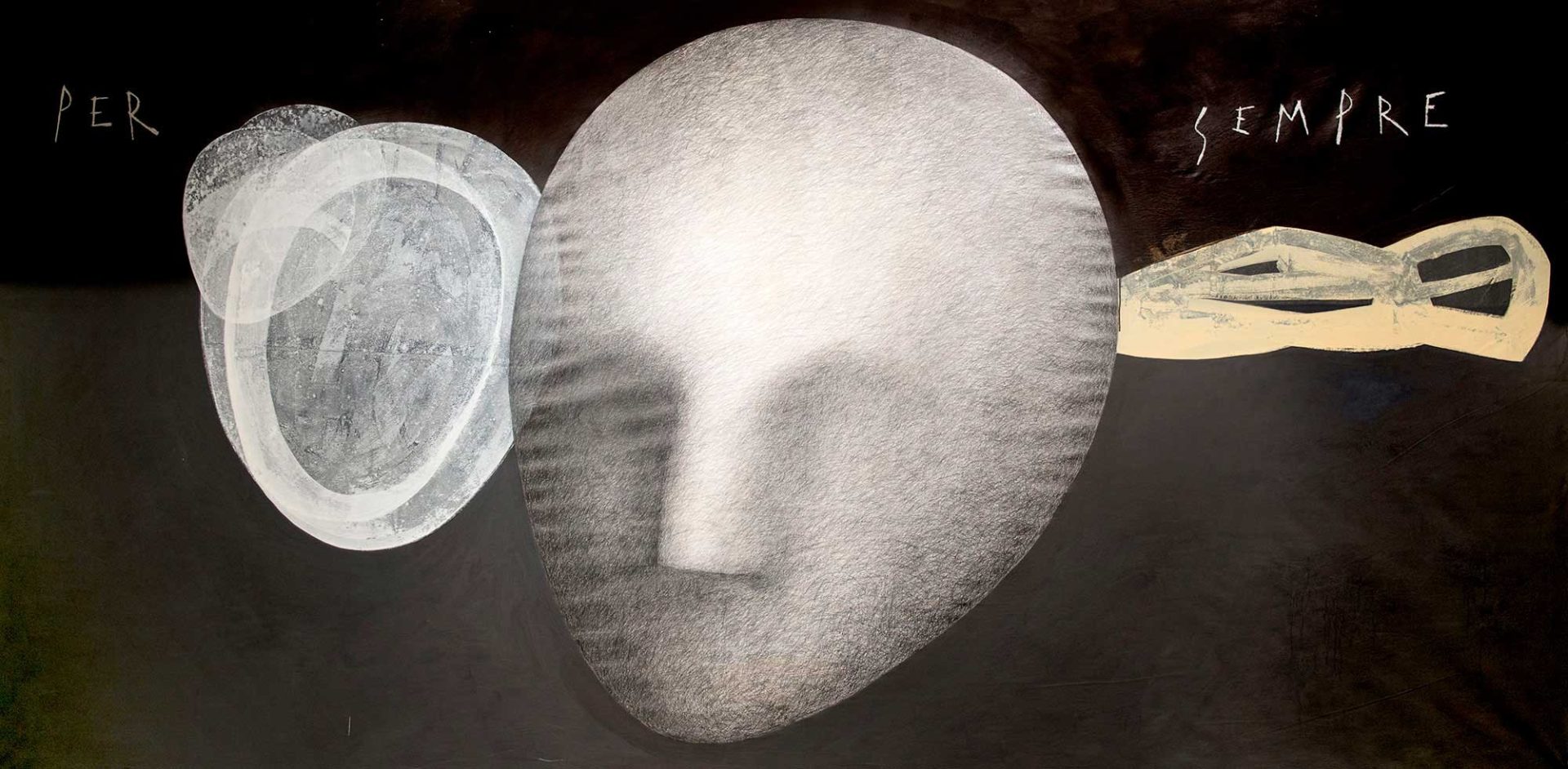
The constant search for a fragment of truth is the ‘Per Sempre’ to which the title of this event alludes, an ideal place where it is possible to experience the only specific human activity whose mission is to perpetuate what always is.
