Works on display
Artists
Curators
360
Recently, there is an entire generation of artists identifying with the movement called “Ethical Art,” representing the rehabilitation and maintenance of a social reason, of the idea of artistic work as daily life, where art listens and produces for a greater sensitivity to life. As a path and vision of the future, in the need to face the complexity of reality by developing new concepts and new languages. These artists assemble their being and living in this contemporary society full of contradictions and ongoing social changes. They read and interpret its political values, and, as always, elaborate their expressive language to seek solutions, provide answers, or at least denounce what others do not see. But this conscious attitude always leads them to turn their gaze toward their roots, toward their memory. A search for references. A search for identity. A search for regenerative energies to protect themselves from others and from themselves in a world that no longer respects anything, that kills the environment, that kills life, dreaming of destroying the Earth for a life on Mars, overcoming the absence of escape routes as the true condition of humanity. Yet their work, which deals with continuity and transformation, viscerally transforms art into a function of rebirth.
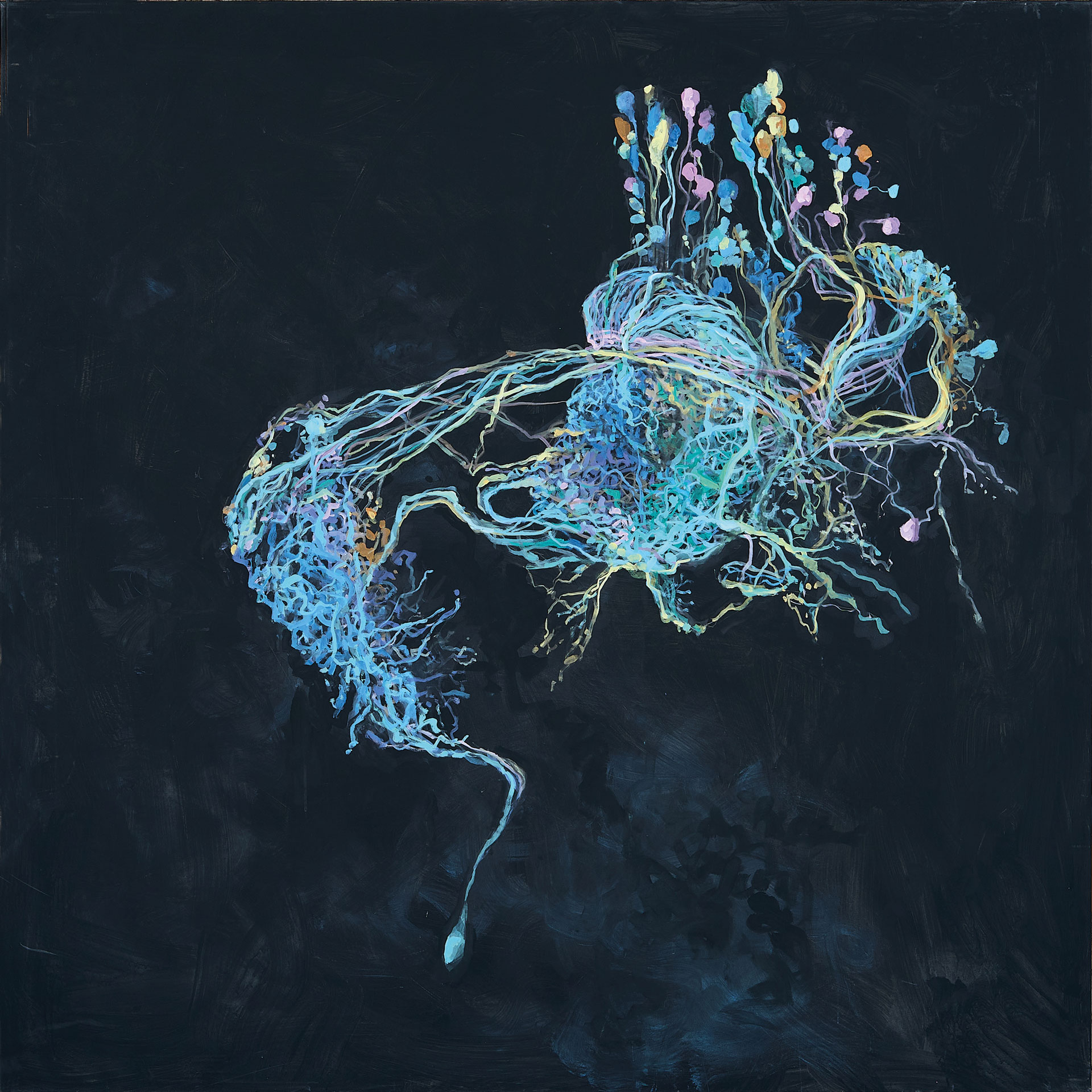
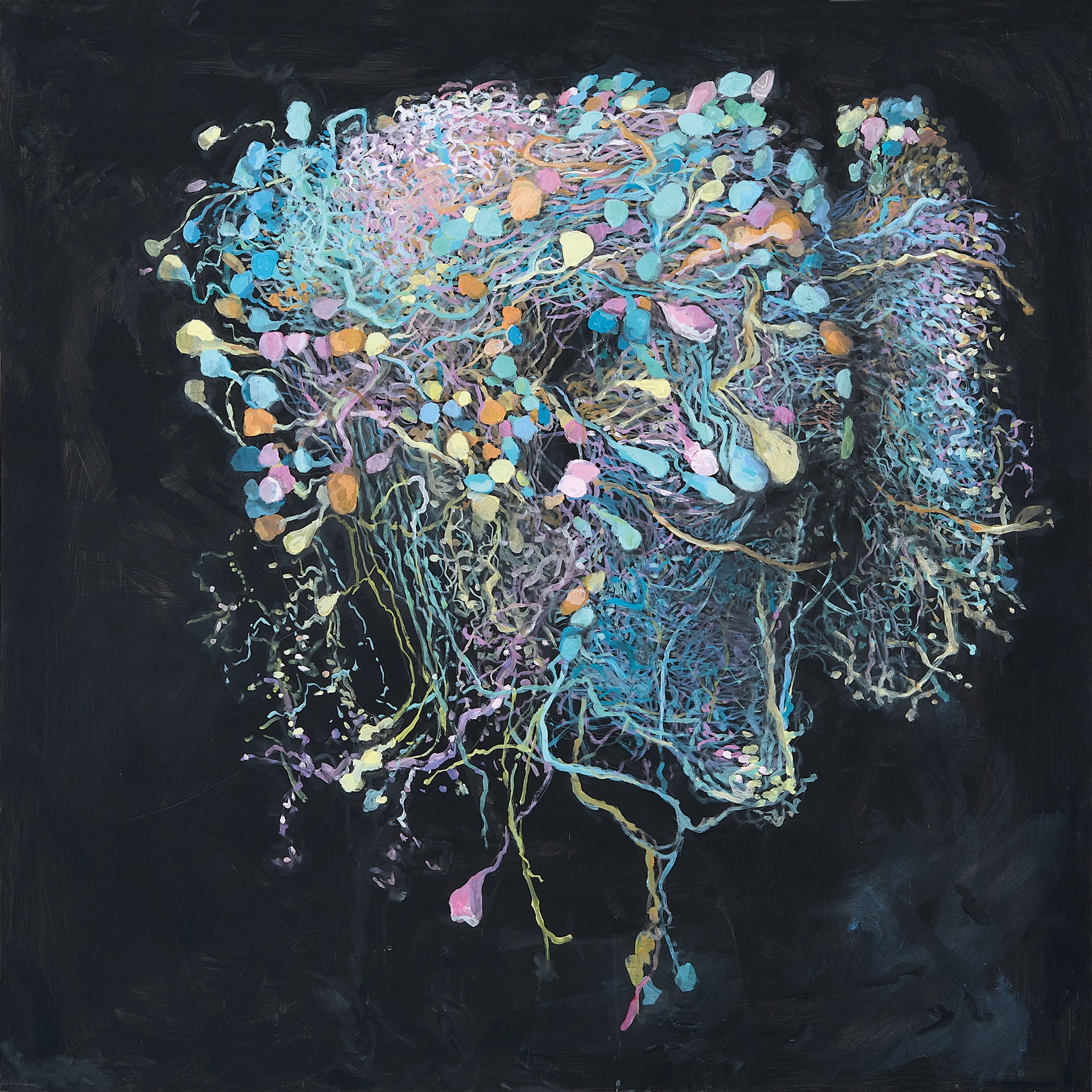
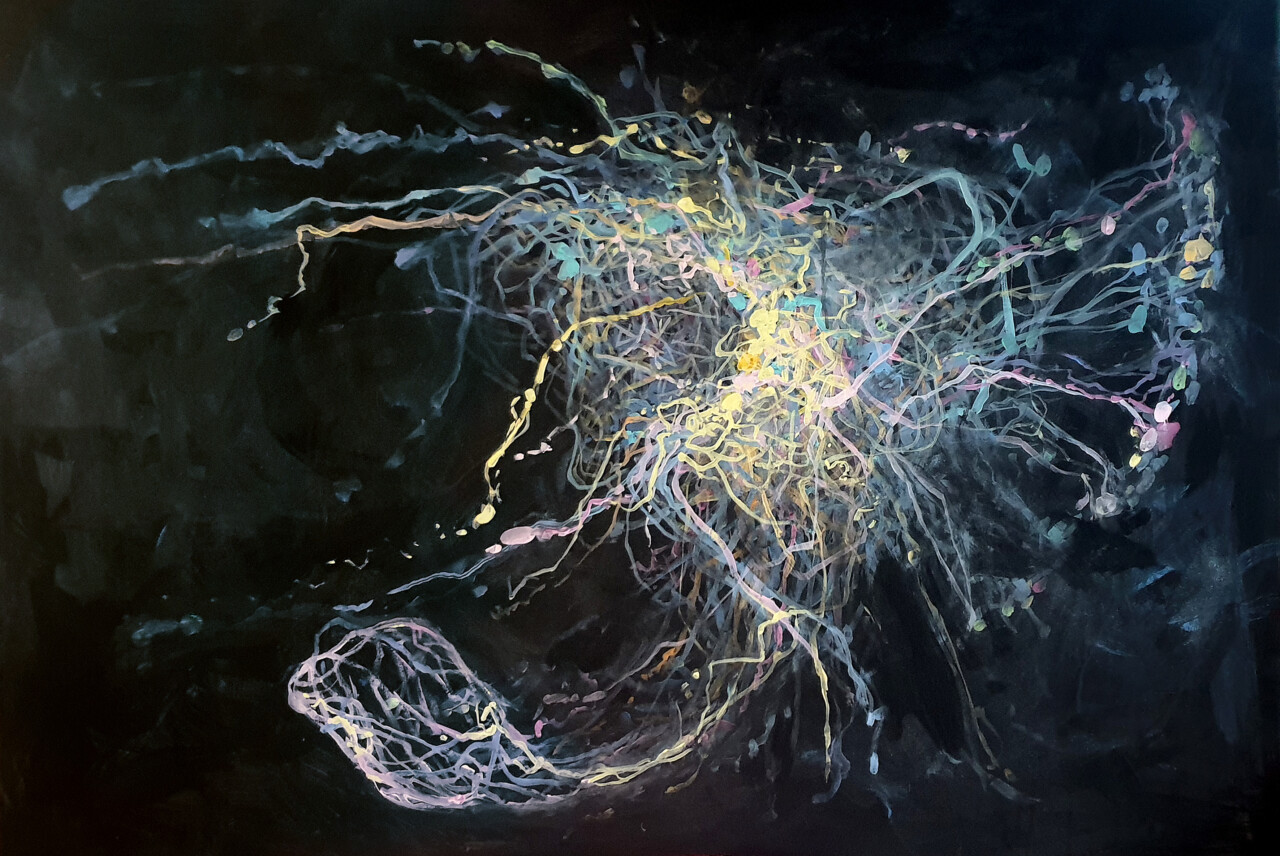
Among these artists stands the multifaceted figure of Alessandro Zannier, a conceptual artist working with music and visual arts, bridging physics, environment, and big data, with multimedia works and concerts. He will present in his first solo exhibition in Rome a cycle of paintings and a multimedia installation entitled “Hyper objects”, compelling us to reflect on issues such as the comatose state of the oceans, where sound waves generated by ship movements constitute acoustic pollution, seriously endangering numerous animal species, alongside other highly impactful human phenomena on the environment and global society.
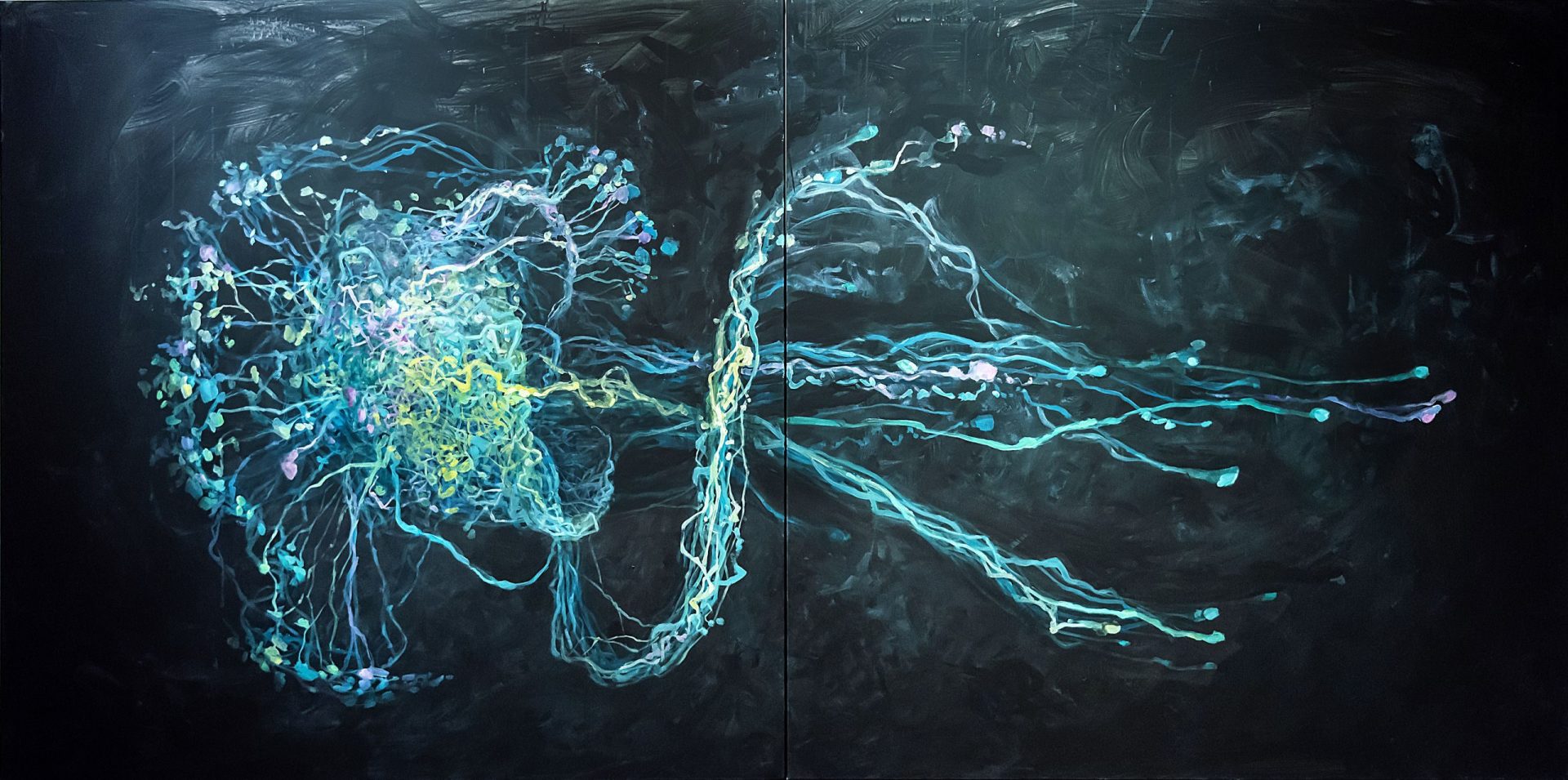
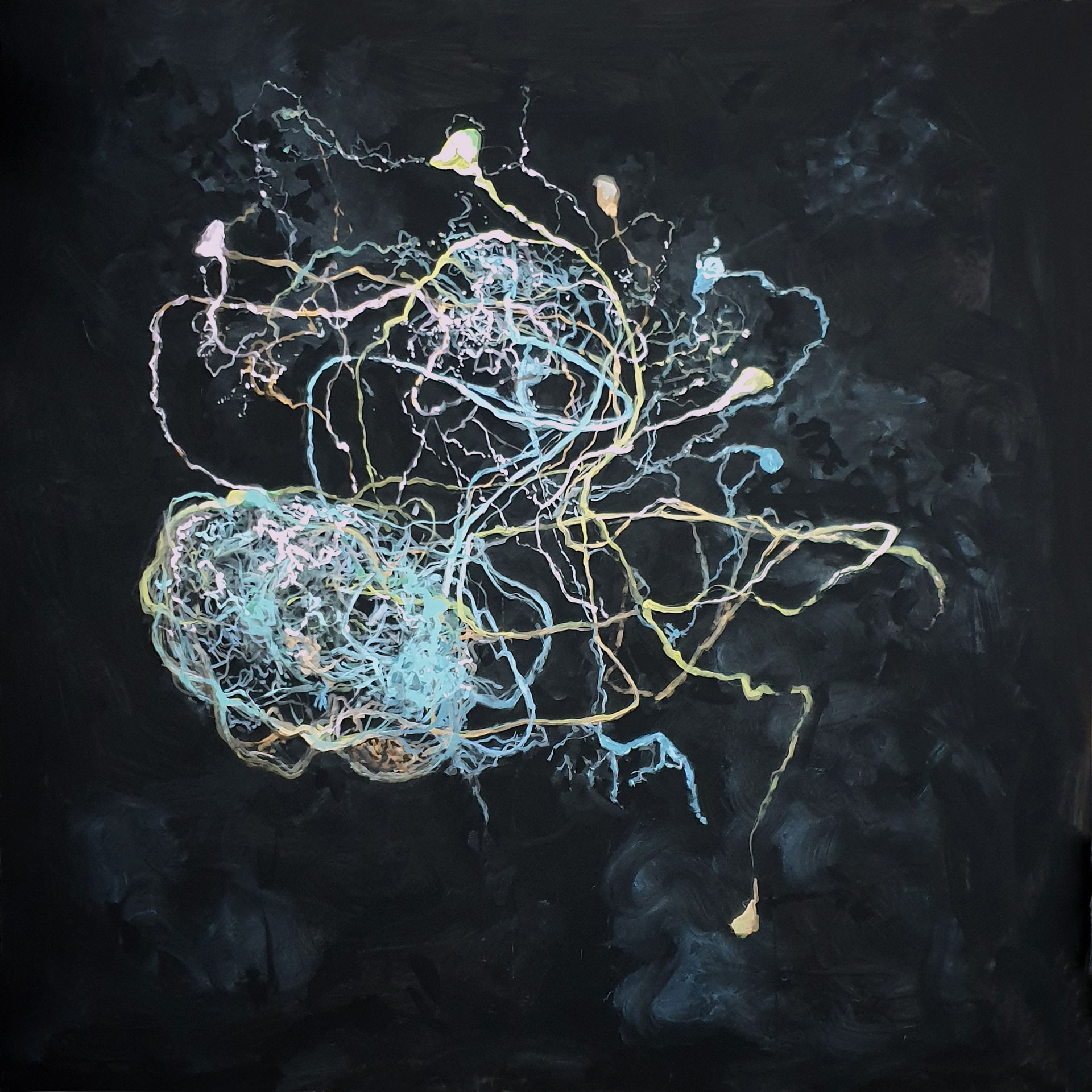
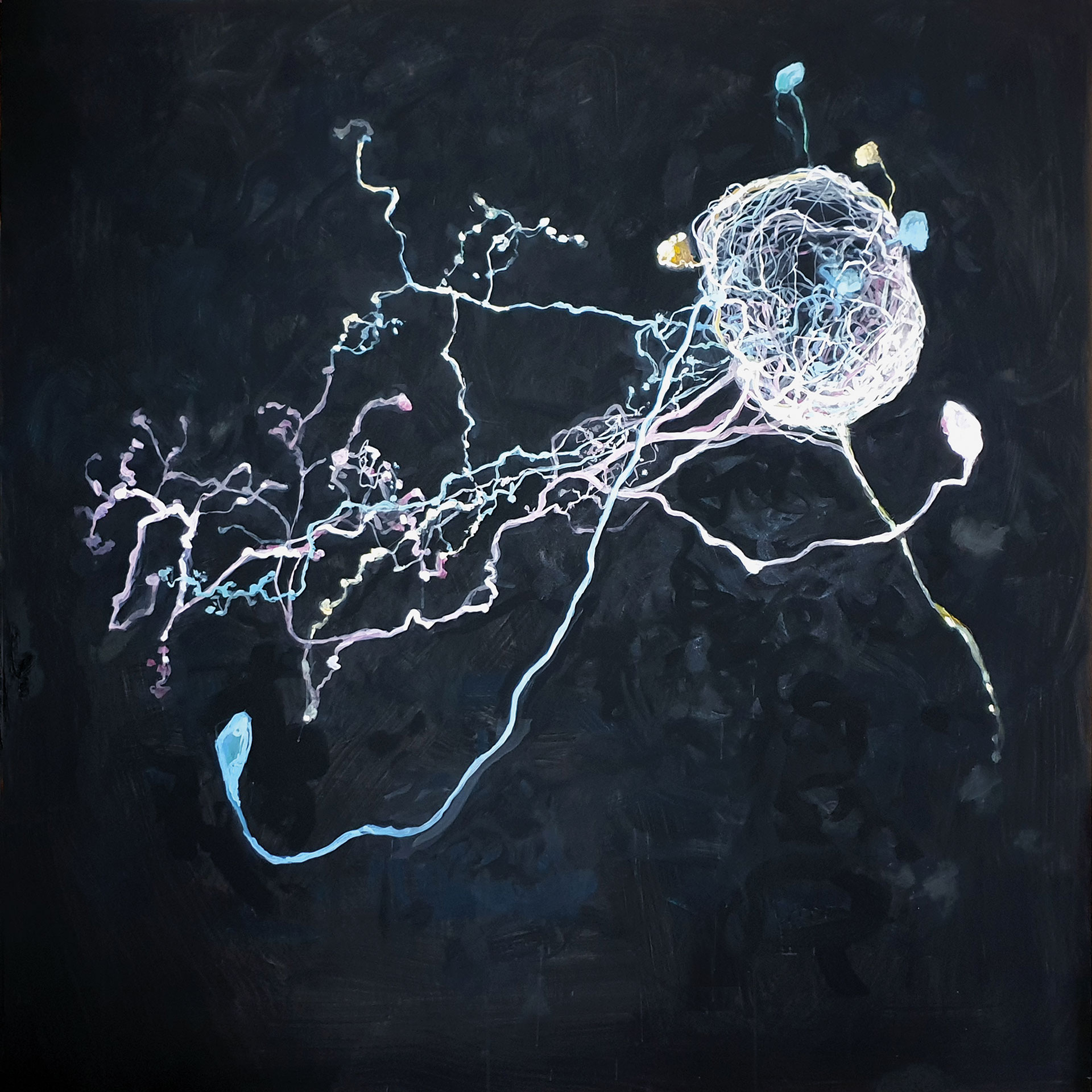
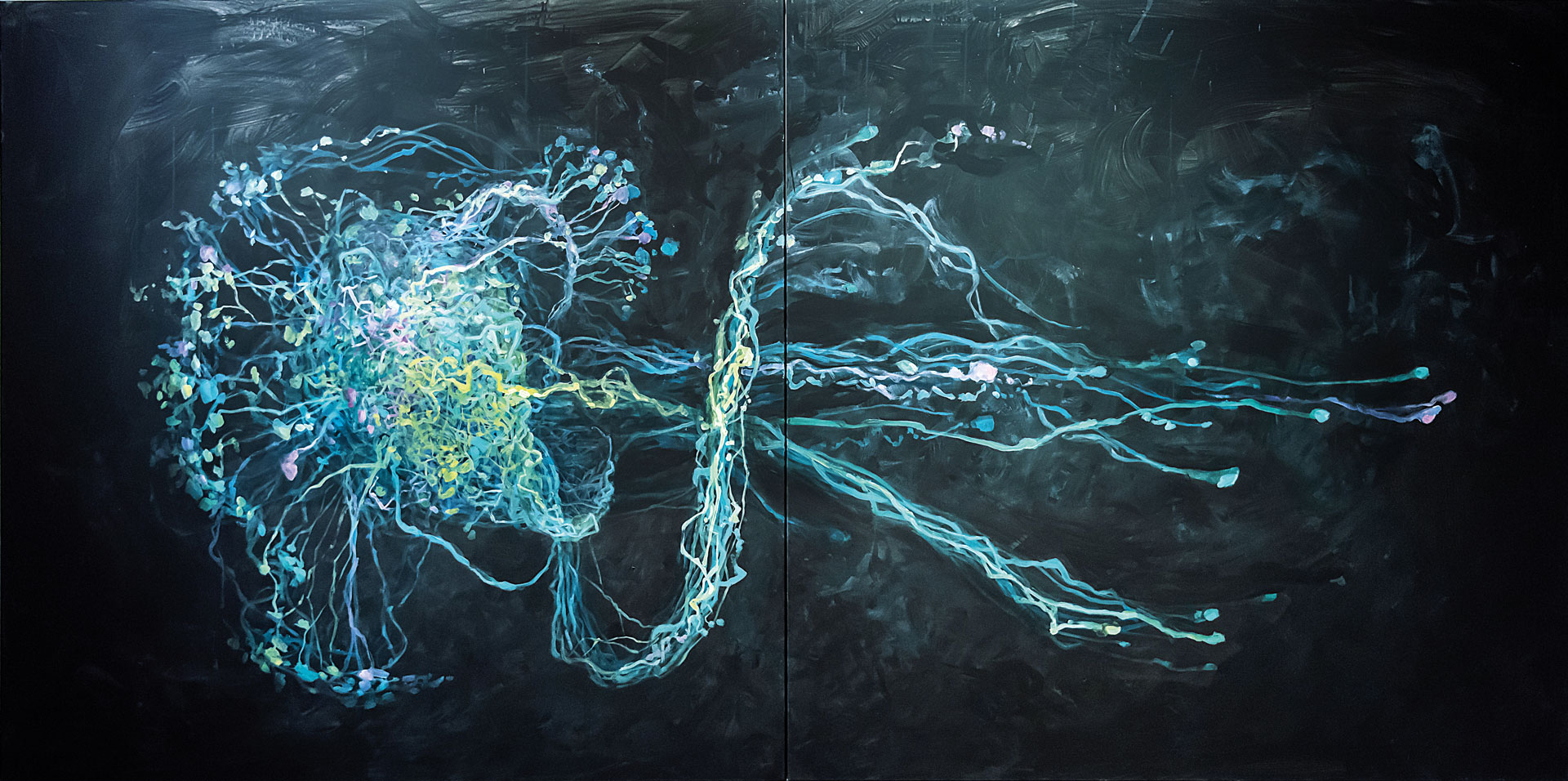
The painted works, seemingly shifting strips of color on an abyssal black base, take us to the ocean depths and encode the vortices of these sound waves, while also evoking the vast plastic islands increasingly floating like a macabre dance in our oceans. True islands of color but also of death.
The exhibition, in collaboration with ARTantide Gallery in Verona, specifically explores the nascent “ENT3,” the artistic twinning with the South American continent, achieved through an exchange of environmental data between the city of Florianopolis in Brazil and Italy, mixing pollution data from Italian cities such as Venice, Genoa, and Rome. These 3D animations are viewable remotely at the Laboratório de Geologia e Mineralogia - Universidade do Estrado de Santa Catarina (Brazil), which, via collaboration with researcher and artist Jairo Valdati, provided specific environmental data from Brazil, also visible at the Kou Gallery.
Video documents and canvases from “ENT1” (Venice/Auckland 2021, Venice Architecture Biennale) and “ENT2” (Venice/Yaoundé – still on display at the Cameroon Pavilion of the 59th Venice Art Biennale) will also be exhibited.
The “ENT” installations are twin luminous structures that create a dialogue between Italy and different continents, crossing big data on various types of environmental or human phenomena, particularly related to seas, such as water acoustic pollution, but also using numerical data on other forms of environmental or human impact, such as migration, deforestation, and overproduction of food. The flow of these data, also obtained in collaboration with Italian CNR and international research institutes, uses sound sources or sonifications of numerical data, generating and stimulating 3D animations representing the evocative form of the “human swarm” as a macro-subject composed of colonies of events, highlighting dynamics analogous to biological and physical forms present on other scales of magnitude in nature. The artist, who has for years conducted musical research based on concepts spanning science, art, and social system analysis, reveals the unprecedented aspect of the “mega human” understood as a “hyper object” composed of multitudinous events, dismantling the concept of individual “I” and highlighting the unconscious collective dynamic of the human colony. As Paul Dirac says <Intuition is, of course, the engine of artistic creativity. Yet within the mental mechanisms underlying the work of artists and scientists, we can find more than a strong analogy between science and art. Perhaps we can find the remnant of their common origin: the necessity and acquired ability of Homo sapiens to elaborate abstract thought and sophisticated representations of the world. These concepts are also elaborated in musical creation by Zannier, who, under the pseudonym Ottodix and his eponymous live ensemble, has for years developed artistic creations in performances and concept albums, in which the poetry of the Ethics of Art is recognizable.
