Artists
Curators
The view on constant social changes brought progressively by the economic crisis requires focusing on the evident differing reactions of citizens worldwide.
Daily news about the Spanish Indignados movement, Occupy Wall Street, and protests in Greece raise questions about the Italian response in a particularly delicate historical moment.
Images of student protests are already distant, and workers’ struggles appear as private matters for smaller groups. A strange phenomenon of social “isolationism,” if not for the sadly noted lack of civic sense. Yet, in a generalized context of deprivation and widespread discontent, the question remains: why do the streets remain empty? Is the loss of the res publica enough to explain everything?
Without intending to analyze Italy’s social history here—which might partially illuminate the issue—we focus on the present. In this sense, Sandro Mele’s perspective acts as a magnifying lens revealing a new front of reflection on contemporary opposition phenomena in the country.
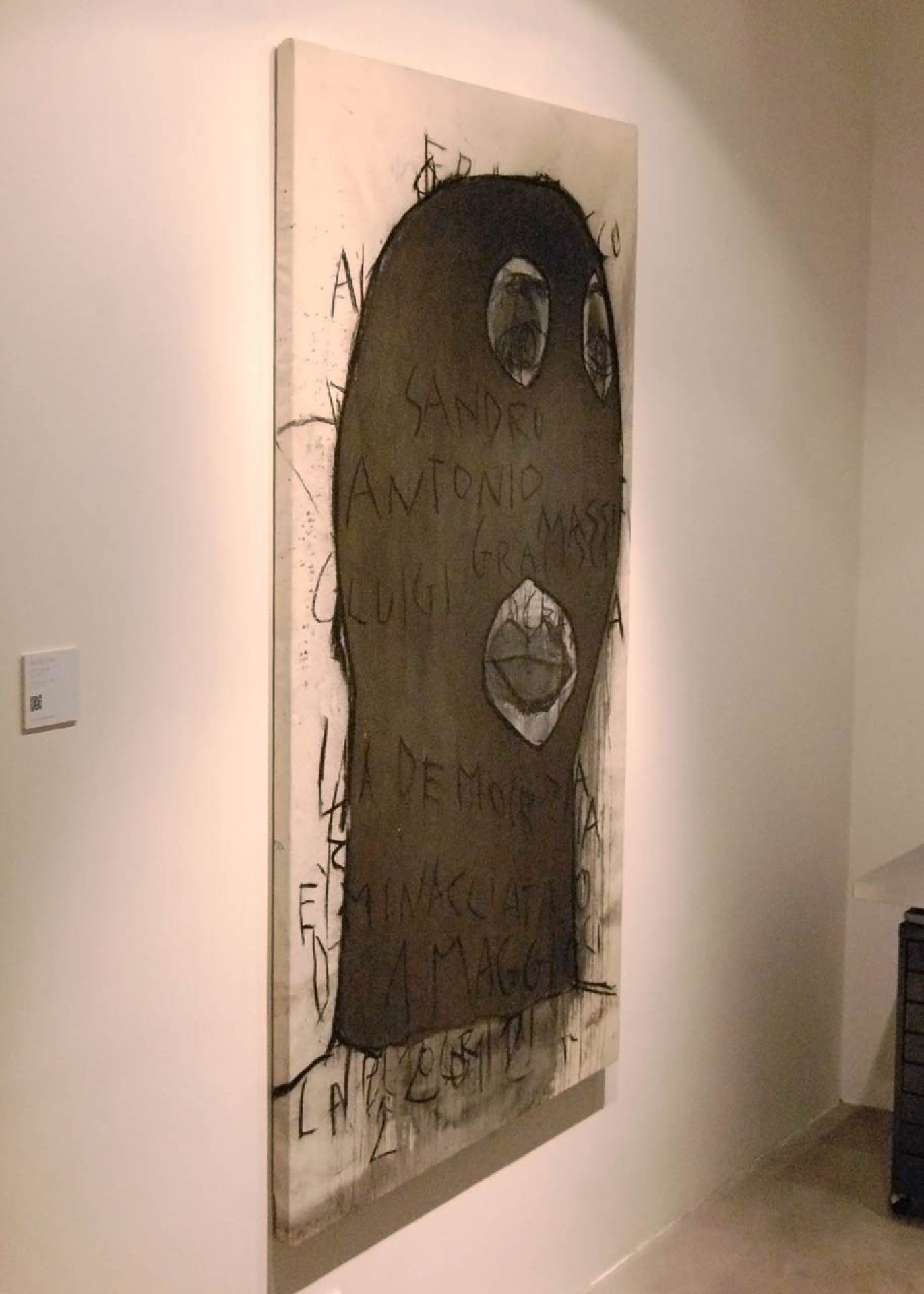
In his research, with a strong political approach, the artist focuses on rights struggles—from students to workers, from self-managed factories in Argentina to Italian struggles—while also observing the invisible working poor (Working Poors, 2011), transparent and silent workers, mostly hidden by shame. The artist’s dual approach—responding to a clear ability to read and translate the present—converges in the work Dolce risveglio, synthesizing both aspects: struggle and resignation.
The cross-reading of the artist’s work and Italian society reveals a widespread sense of resistance marked by endurance. Mele captures and translates this resistance/endurance, seeing its evolution toward exasperation, leading to the prefiguration of an “everyman,” with a softly sad gaze, reluctantly taking on the role once worn by the hooded figure of Fratelli d’Italia (2011), evoking the uncontrollable rage of the black blocs. A raw and austere image, in its aesthetic form, quickly transforms resistance into revolution, implying popular involvement far broader than ever documented, even in the darkest pages of the country’s history.
Federica la Paglia
