![Pyros [πυρο], Written in the Fire](/data/img/event/KKHEMB.jpg?251201)
Works on display
Artists

Curators

360
The twelve canvases presented in Pyros, Written in Fire trace a path that marks the evolutionary passage from the early age to the artistic maturity of Patrick Eduardo. Error Connection is the starting diptych, two canvases that reveal the artist’s past — the first stage of his evolution — echoing the distinctive style that has defined Eduardo’s career until now. In the background, the opaque strokes already signify a transition toward the new; the large golden “X” shapes cross the canvases from corner to corner, representing a reception error that connects the old and new realities.
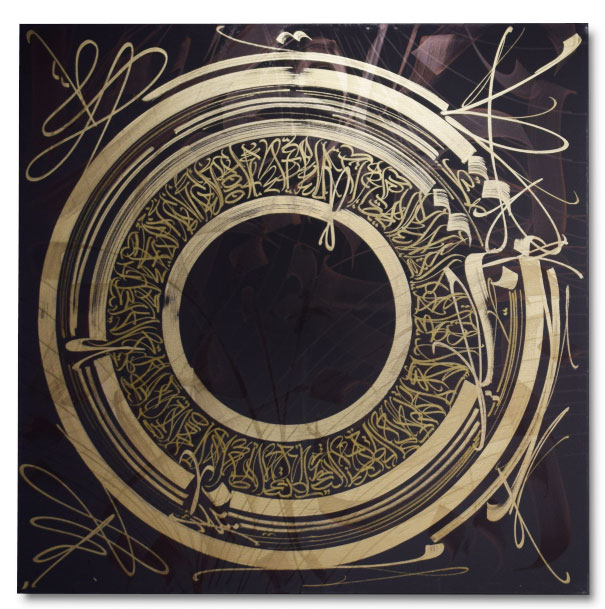
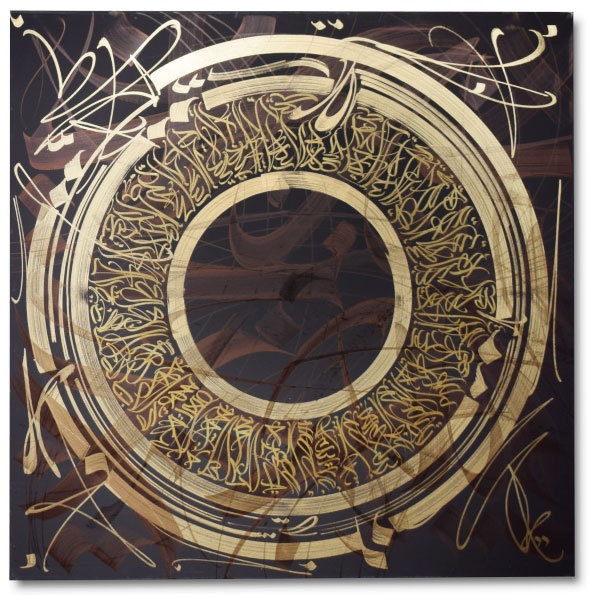
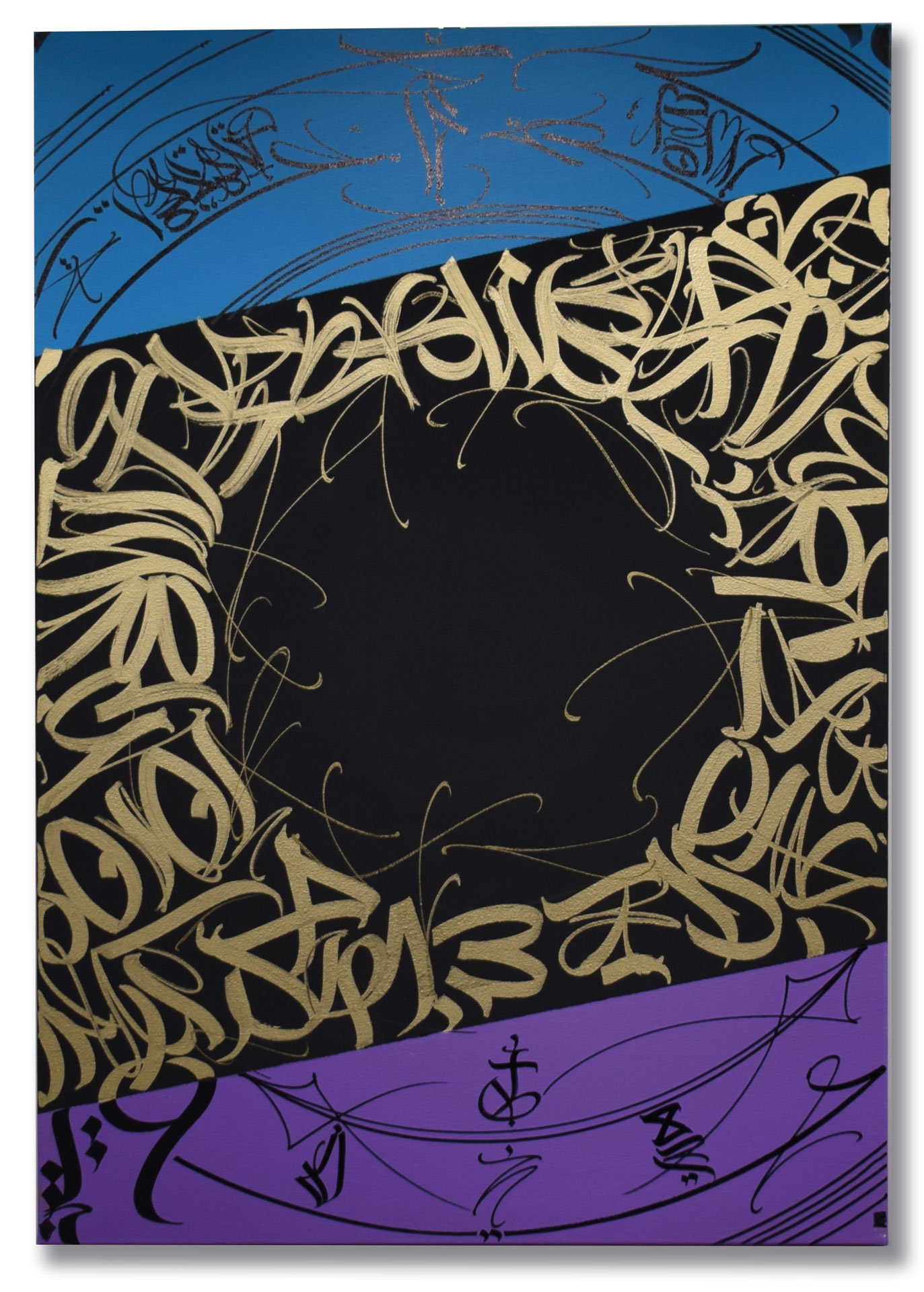
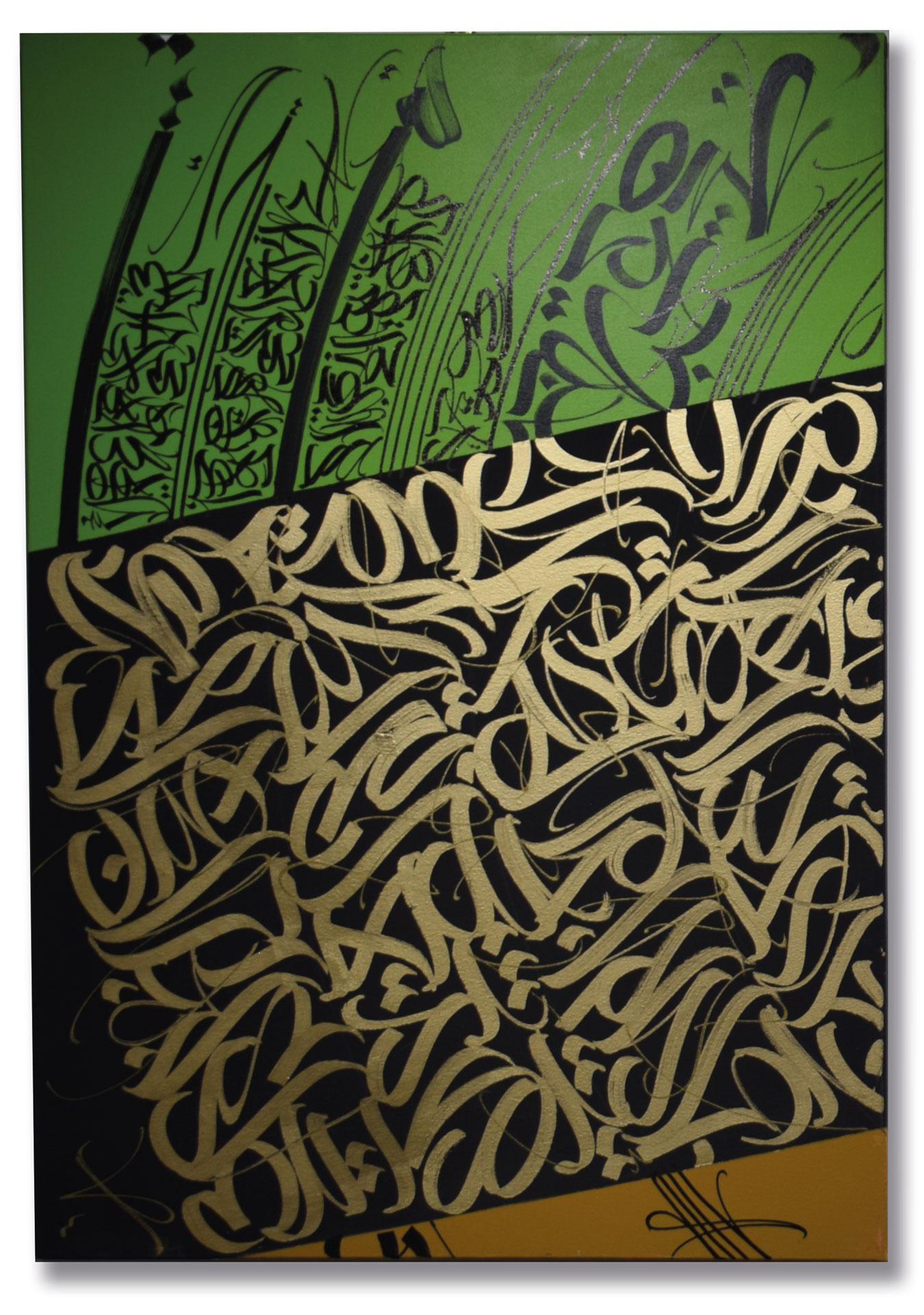
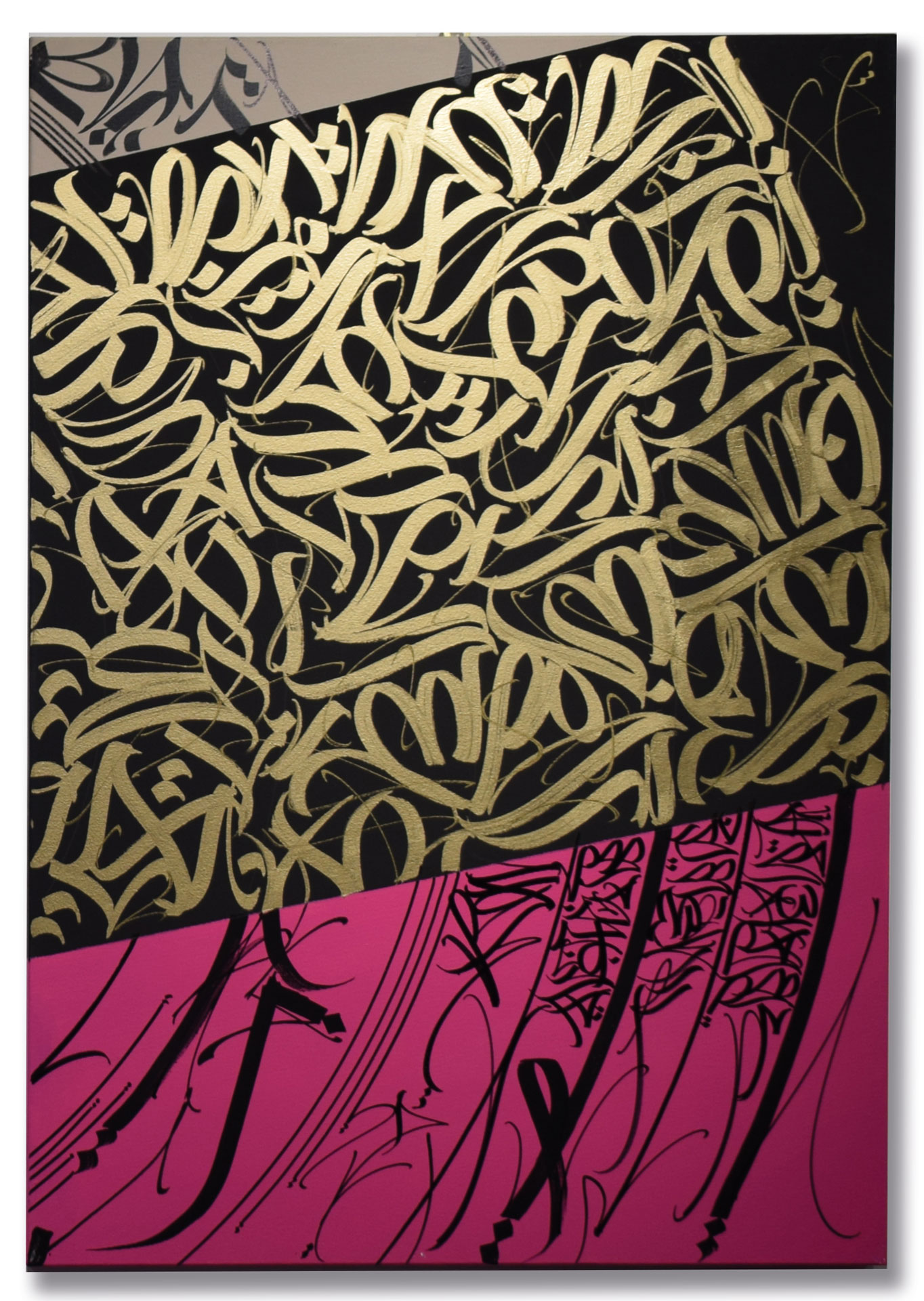
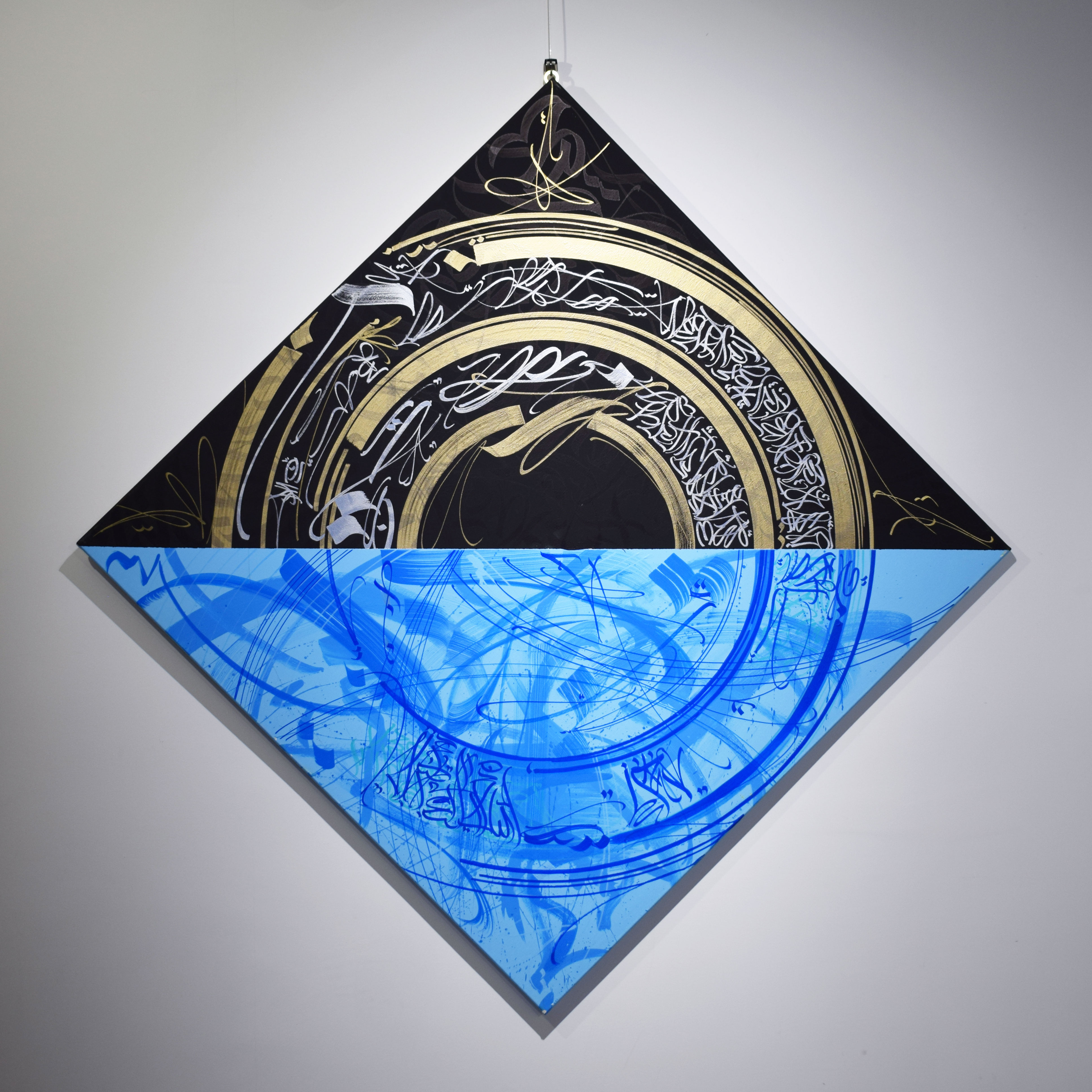
The journey continues with Present Illusion, an intermediate triptych, uniting the old and the new, the classical and the modern, the artist’s past and present. The central diagonal again features Eduardo’s signature style — gold on matte black — forming concentric circles that fill the entire perimeter of the canvas. On the sides, however, color begins to emerge, becoming an integral part of the study started in 2019. Gradually, it takes up more space, integrating alchemical symbols and more refined, delicate strokes. The contrast of colors and optical illusions dominates, creating an inverse blackout: from the darkness burst forth green, blue, fuchsia, and violet, while white and ochre also appear — the artist’s dark era is coming to an end.
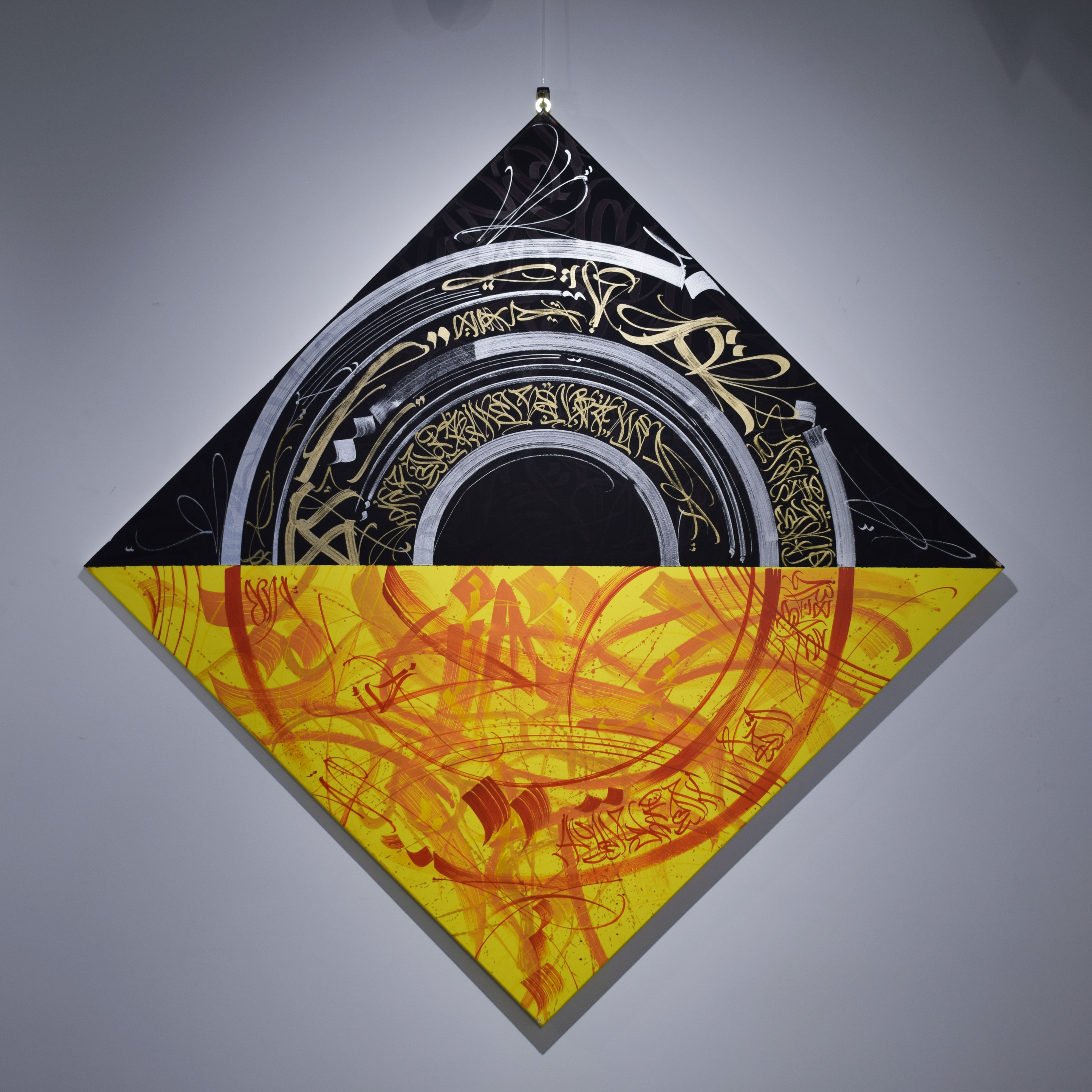
The next two canvases, The Fire Of The Moon And Sun, once again present this dichotomy — a clear division between Eduardo’s artistic maturity and his “adolescence.” The concentric circles remain integral to the old style but fade as they transition into the new era. Fire is the key element of the work. Like fire, the new style spreads over the old, pushing through the darkness of the past and giving new life, like a phoenix, to a reborn Eduardo.
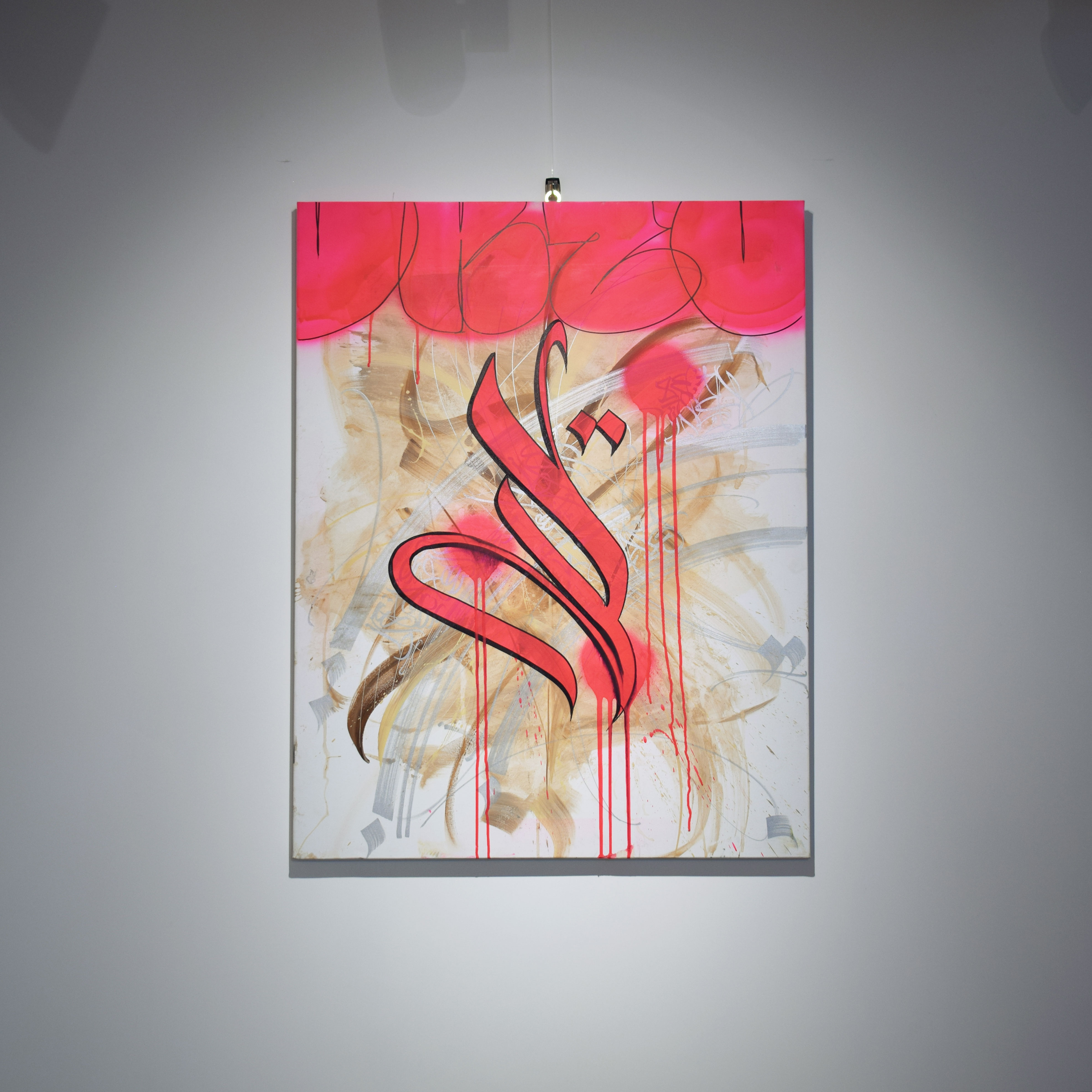
We then arrive at Luminescence: modernity has now triumphed over the ancient, color has overtaken black, and fluorescent tones dominate the matte base. Once again, fire prevails, represented as natural energy. Fluorescent enamel stands out against gold, brown, and silver, highlighting the ultimate contrast between earth and fire in a contemporary key.
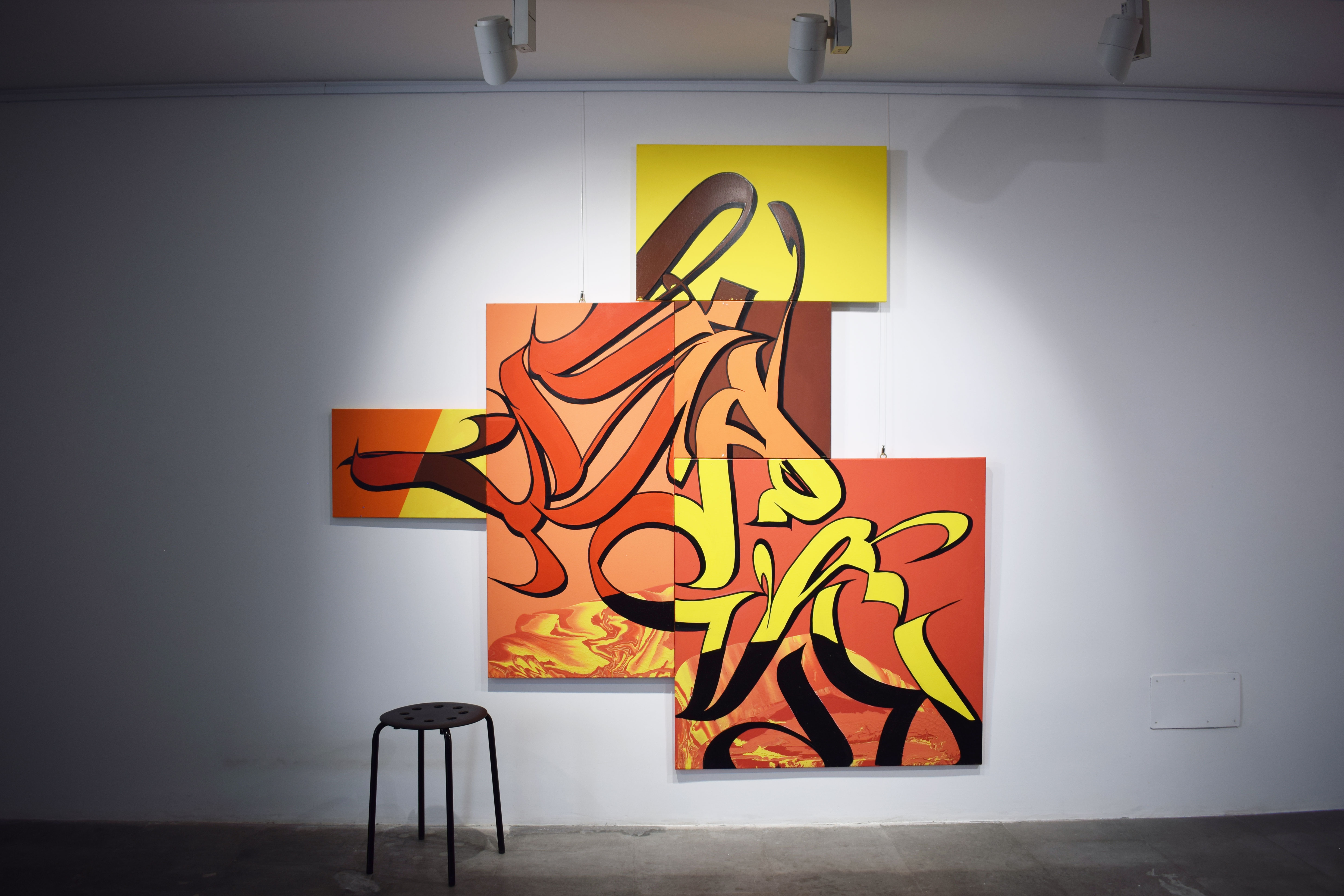
The final stage of Eduardo’s artistic journey is Chirographum 1853.
“The princely or ducal families who in the past have obtained, or in the future may obtain, such a title from the Holy See, and who have their principal residence in Rome — even if they are not included in the register of Roman Nobility — shall henceforth be part of it; and from among these families, when necessary, the number of the sixty conscripted Patricians desired by the said Constitution of Benedict XVI may be completed.”
Thus reads the Chirograph of May 2, 1853, issued by Pius IX, establishing the registration process for the Roman noble families. The artwork is dedicated to them: like a chirograph, it fragments its figure into five canvases which, united into a single composition, convey the ultimate meaning of the piece. The colors reflect the leading element of the exhibition — fire. The lower section, like a stream of lava, burns the calligraphic symbols into a new, reborn Patrick Eduardo — never before explored — blending Renaissance, pop art, and street art in the work that thus concludes Pyros, Written in Fire.
Federica Piras
