Artists

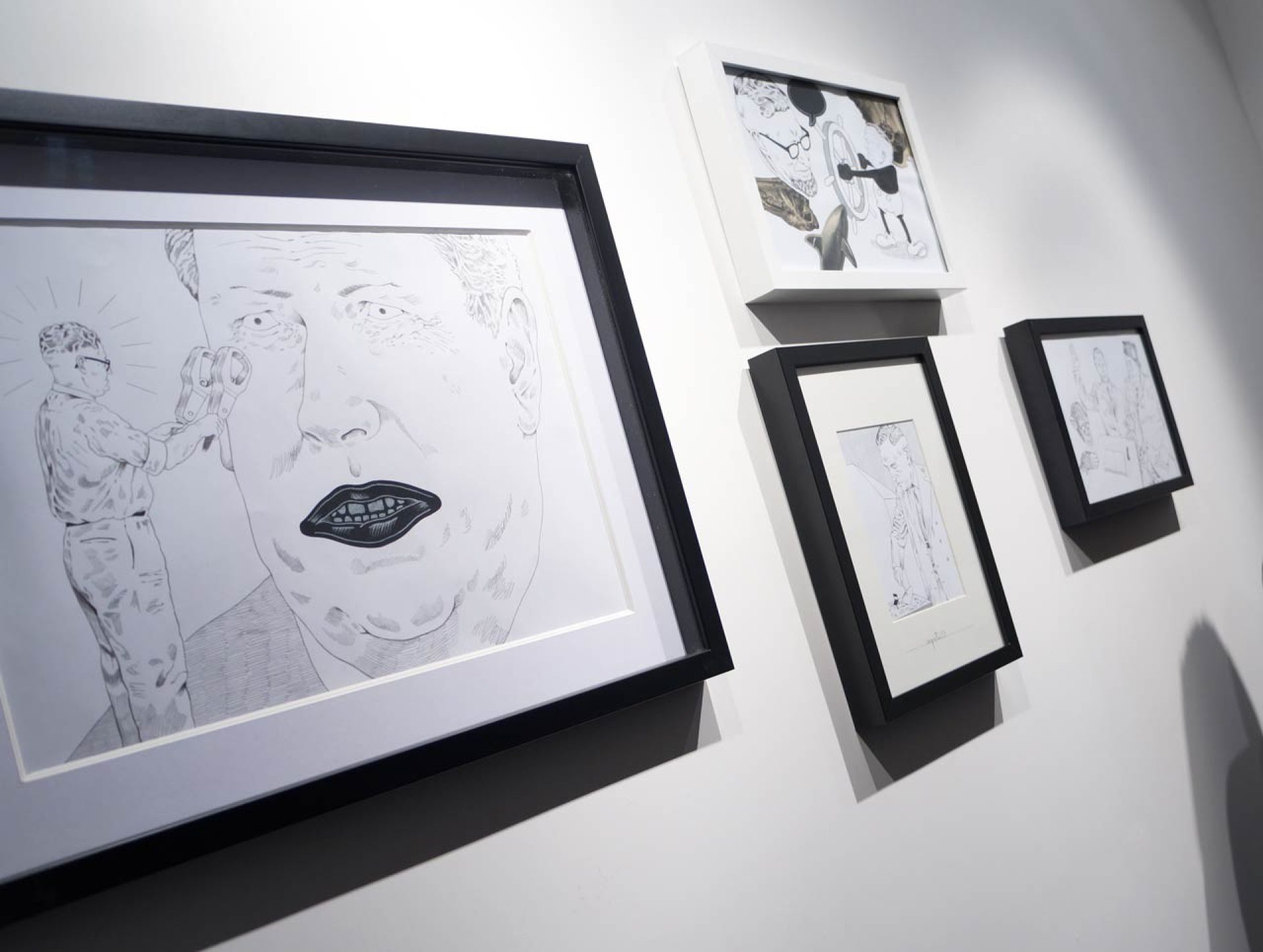
I really like the title of Tommaso Medugno’s exhibition. Persuasion reminds me of Packard’s The Hidden Persuaders, which was one of the most important texts for the culture of dissent. Half a century ago, warnings about being manipulated by the media circulated everywhere; today, it seems a mischievous demon has reversed the values of that culture, and people enjoy being recorded, copied, scrutinized by a Big Brother who “cares” about you, even intruding into your private life. Of course, this is not true, because they simply want to know you as a consumer. We know this so well that it seems fitting that McLuhan and Frank Zappa have been forgotten. Stylistically and content-wise, Tommaso Medugno frequents a period that could contain the last common language of aesthetics: hair with brilliantine, perfectly tailored jackets, neatly pressed trousers worn by James Stewart in Hitchcock films and by all the Bogarts in various Lubitsch situations, representing the last expression of beauty, soon to be replaced, or poorly substituted, by casual fashion. High technology was never missing in the aesthetics of those years, symbolized by man’s omnipotence reaching the Moon, and this is powerfully cited as well.
In the 1980s, the most uncompromising Punk renewed attention to the linguistic system emanating from the media, which had become essentially self-referential. In this, the public processes the private with cheerful despair, because privacy is useless if the media do not care, and on the other hand, privacy violated by the media is inaccessible even to the agents (and subjects) of news themselves. But Tommaso Medugno’s characters seem to want to convince you that they are the good ones, that you can trust them, just like the attractive and “convenient” offers of the media. Yet, all this is perfectly well known. I would even say this is such a cold and stale subject that it should no longer warm the heart of any true artist. I think there are other motivations behind these works. The engagement with unpleasant topics could also portray a sense of discomfort, as investigating such propriety is a bitter task, like dredging up uncomfortable subjects—still relevant today. Perhaps this expresses the intentions of this excellent hand, in which the soul of a moralist might subtly emerge, a moralist of image and media communication.
