Artists

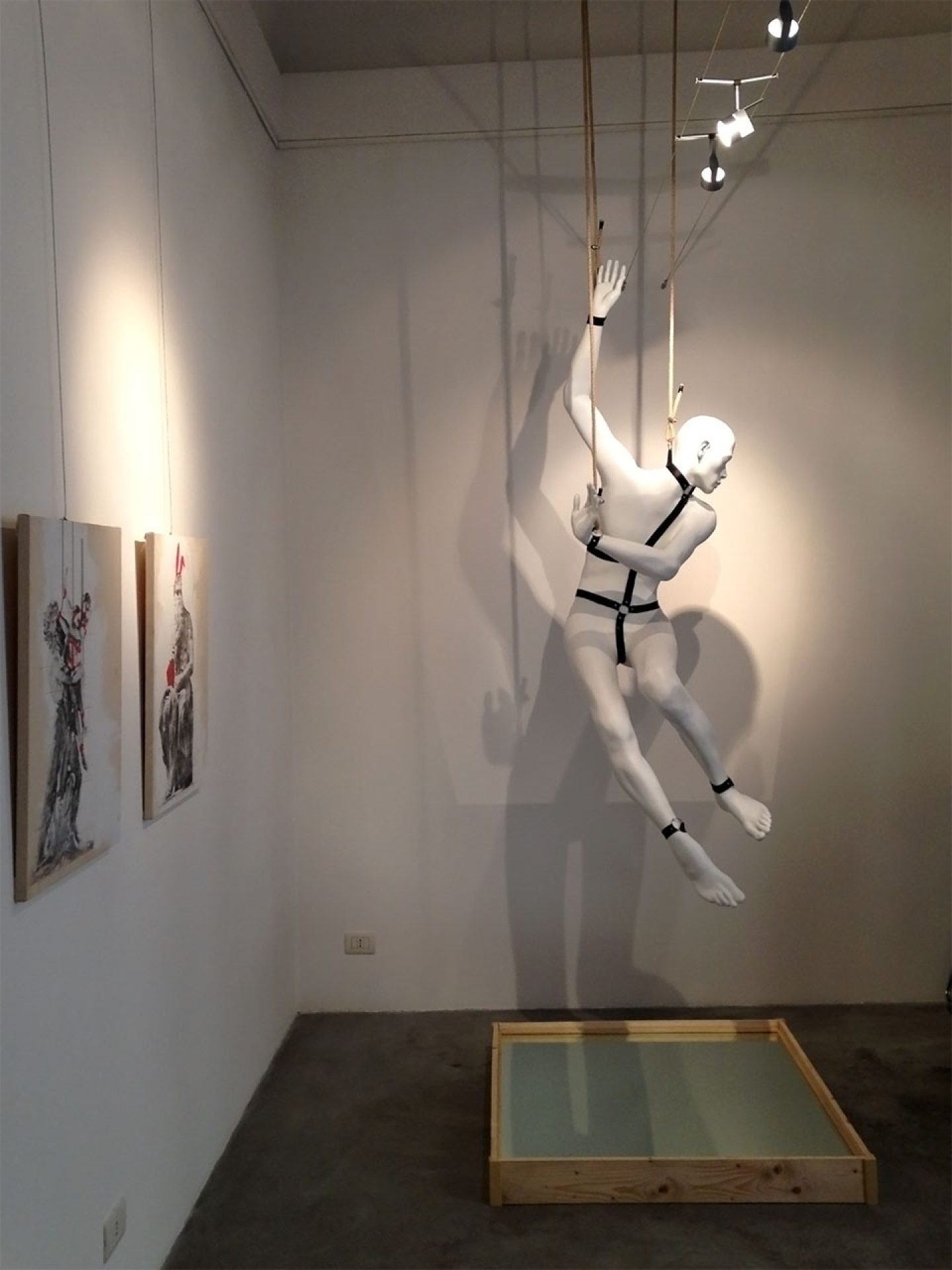
Christophe Constantin’s research is the conceptual and aesthetic result of a synthesis between two distant yet not entirely different ideologies: Realism and Pop Art. Elements traceable to both movements are present, making it difficult to place his work fully within one or the other. It is therefore appropriate, when analyzing Constantin’s work, to speak of “Pop-Realism.” To clarify this brief but essential premise, I will examine the “Venus,” a work included in the exhibition. The title and subject are already clear examples of the appropriation process used by Pop artists, who employed mass icons to achieve an immediate and universally recognizable visual language. Yet while Pop artists drew from the most blatant and frenzied consumerist imagery, Constantin instead appropriates more refined images drawn from great masterpieces of the past—still recognizable due to their deep-rooted presence in humanity’s collective unconscious.
However, unlike Pop Art, which in many cases remained superficial, becoming both cause and symptom of the paradoxes of society, Constantin expresses through the formal and aesthetic poetics of his works the profound unease of our era with cold irony, while simultaneously proposing a decisive critique of the contradictions that define the present. This is precisely what distinguishes him from Pop Art and brings him closer to a form of Realism with social and political overtones.
The Venus is impoverished and desecrated in the same way that postmodern ideology and mass-media societies—idolizing and encouraging extreme consumerism—have impoverished and desecrated human spirituality and interiority, transforming the individual into a disposable automaton. The Venus is placed on a pedestal that is also her own shipping crate, indicating how the anxiety of consumerism has struck deeply, extending even to culture and art. The work enters the gallery and, the moment it is viewed, it is already ready to be packed away, forgotten like an old garment or appliance.
As noted, the Venus—metaphor for the effects of capitalist societies on humankind—is desecrated and exploited, silenced by a “bondage ball.” A silence resigned to the exploitation of her image for commercial and advertising purposes. Yet these elements are not mere conceptual illustrations or philosophical speculations on reality. Aware of the visual anemia that characterizes distracted contemporary viewing, Constantin introduces the extreme sexual aesthetics of bondage as a tool to capture the inattentive gaze of the modern viewer.
The idea of the Venus resting on the pedestal that is also her own crate is, in fact, the exploitation of a jarring visual contrast—the pure white plaster of the sculpture against the rough, dirty wood of the crate—causing both surprise and irony. In this way a phenomenological perceptive path is created, allowing the viewer to approach the work aesthetically and intuitively grasp the conceptual and ideological motivations behind it.
