Artists

Curators
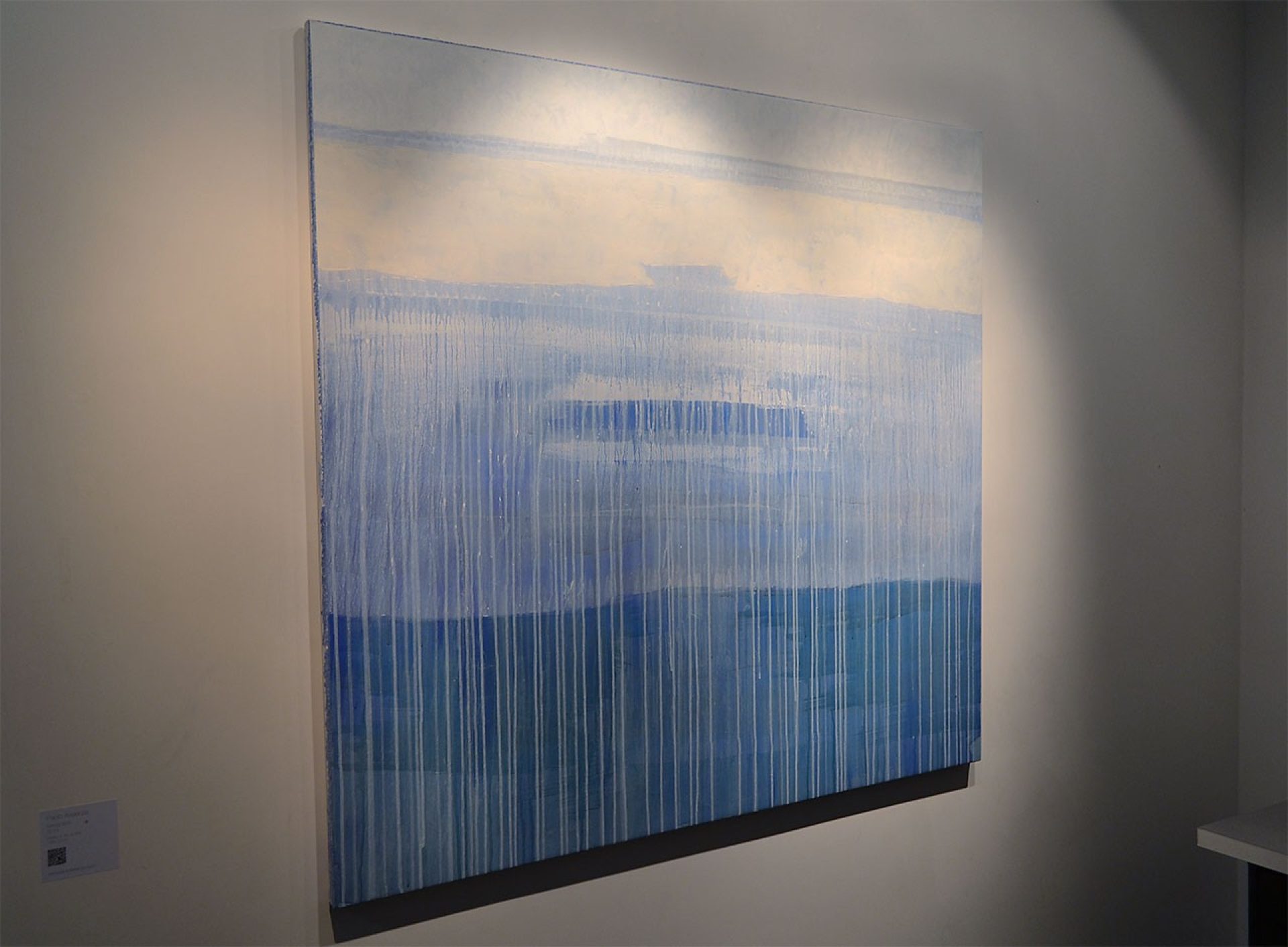
In Paolo Assenza's streaks, we feel called to intervene with our vision, placing them at a precise point between reproduction and reality, while these works resist being categorized. We face a floating world, with multiple horizons, where colors refer not only to nature but also to the soul, in a suspension that ultimately speaks of us. In this arrangement of acceptance and refusal, the dual attitude underlying these works is evident: on one hand, there is attention to the world, on the other, a refusal to become its inhabitant. Thus, these landscapes, if they can be called that, fade into indistinctness, uncertain whether to participate in the world or abandon it. Likewise, there is indecision in trusting the eyes to comprehend or surrendering to the sign and its rough representational concreteness. These works revisit a central theme of 20th-century painting, debating the difference between vision and mental reconstruction, from Cézanne onwards. In Paolo Assenza's recent production, the novelty lies in explicit two-dimensionality, stretched across non-naturalistic parallel planes, confessing the impossibility of understanding the world and resulting nihilism. These works oscillate between dispersion and evocation, between graphics and reproduction of nature. Consequently, characters, once present with minimal destinies, are entirely absent. Attention remains vigilant due to the materiality of the painting, with controlled, almost erased touches fading into the imperceptible. Though understated, these works carry all the degrees and values of existential becoming, revealing richness slowly, while embracing and displaying all interior dispositions, including estrangement.
Paolo Aita
Gallery


