Works on display
Artists
Curators
360
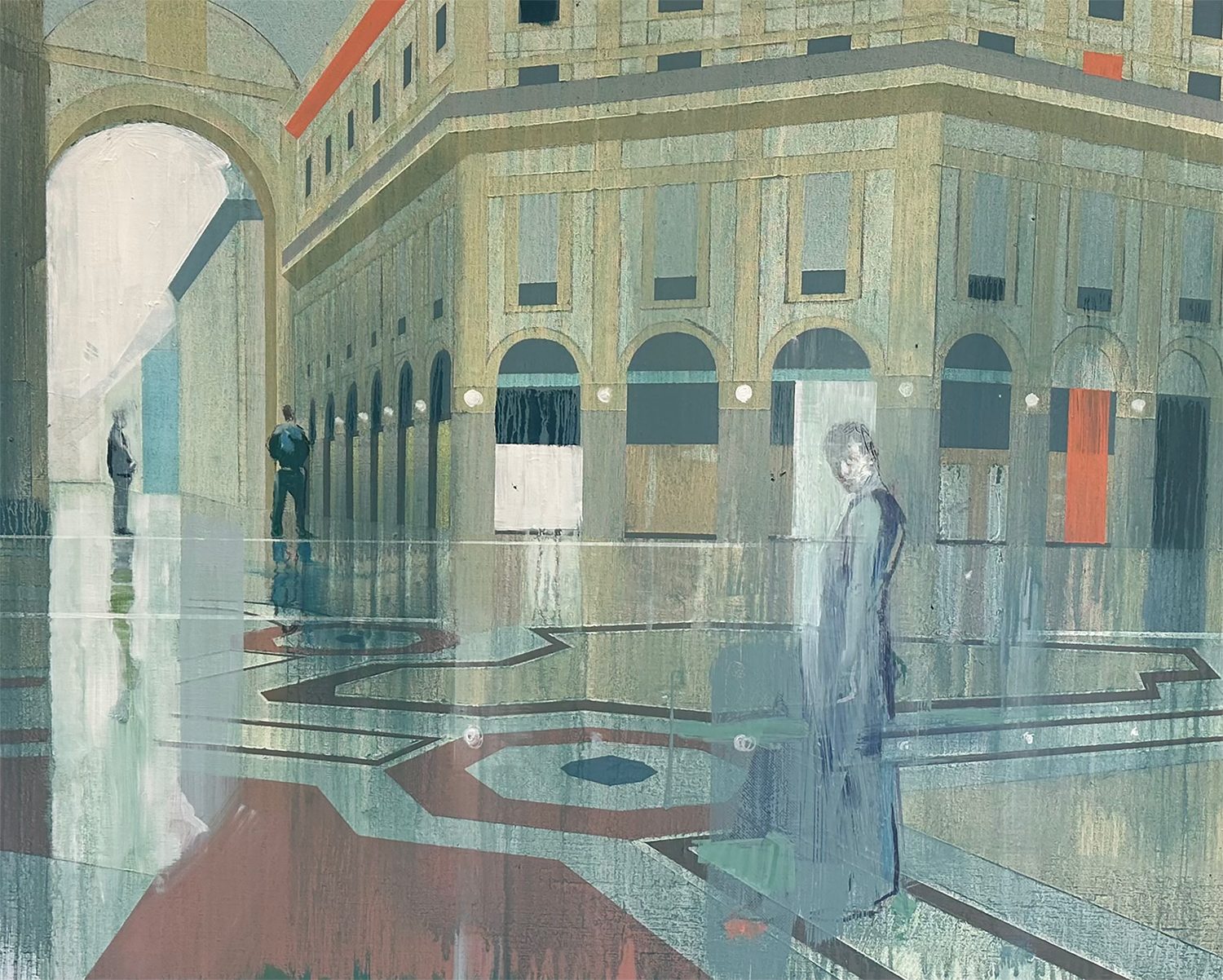
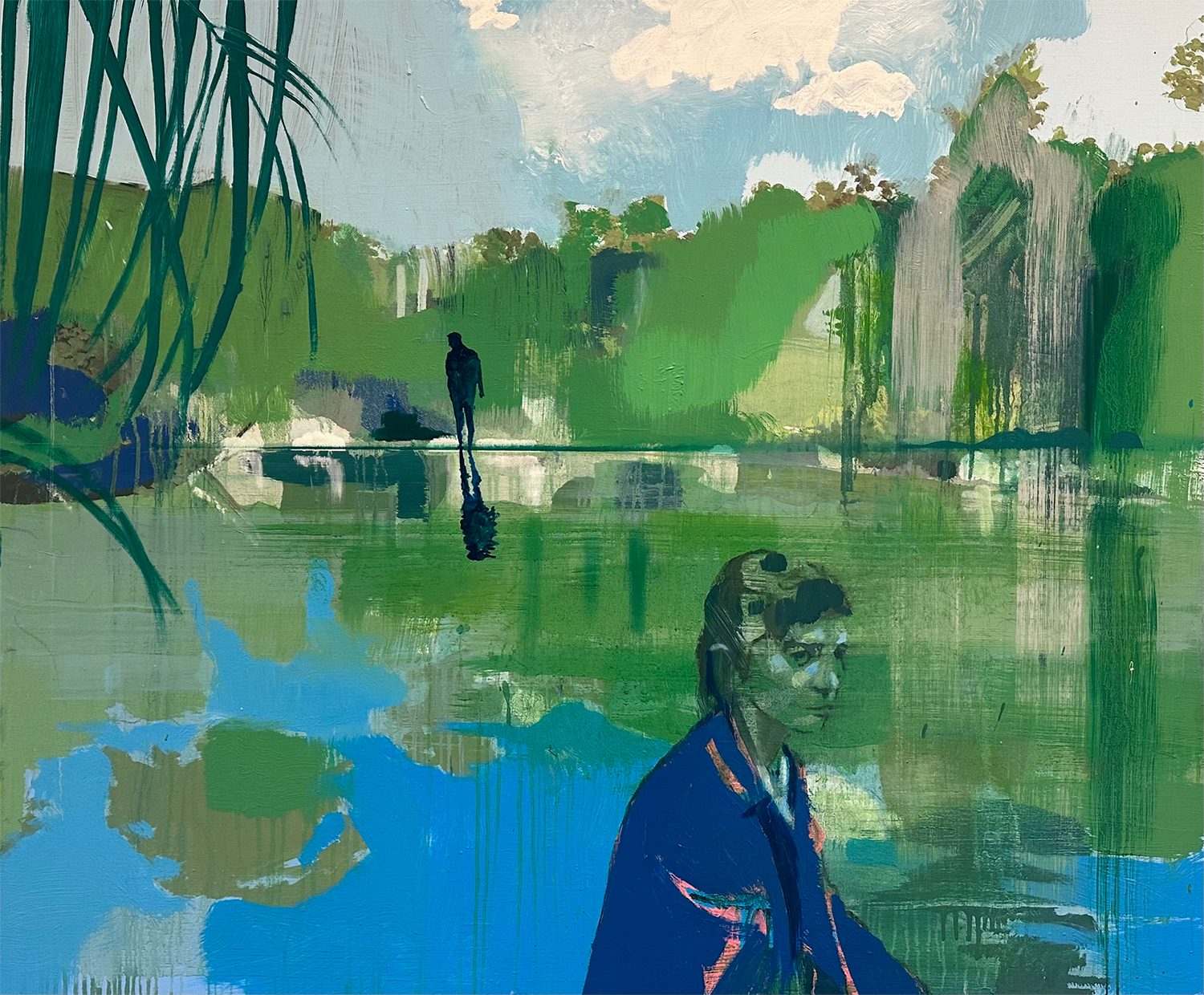
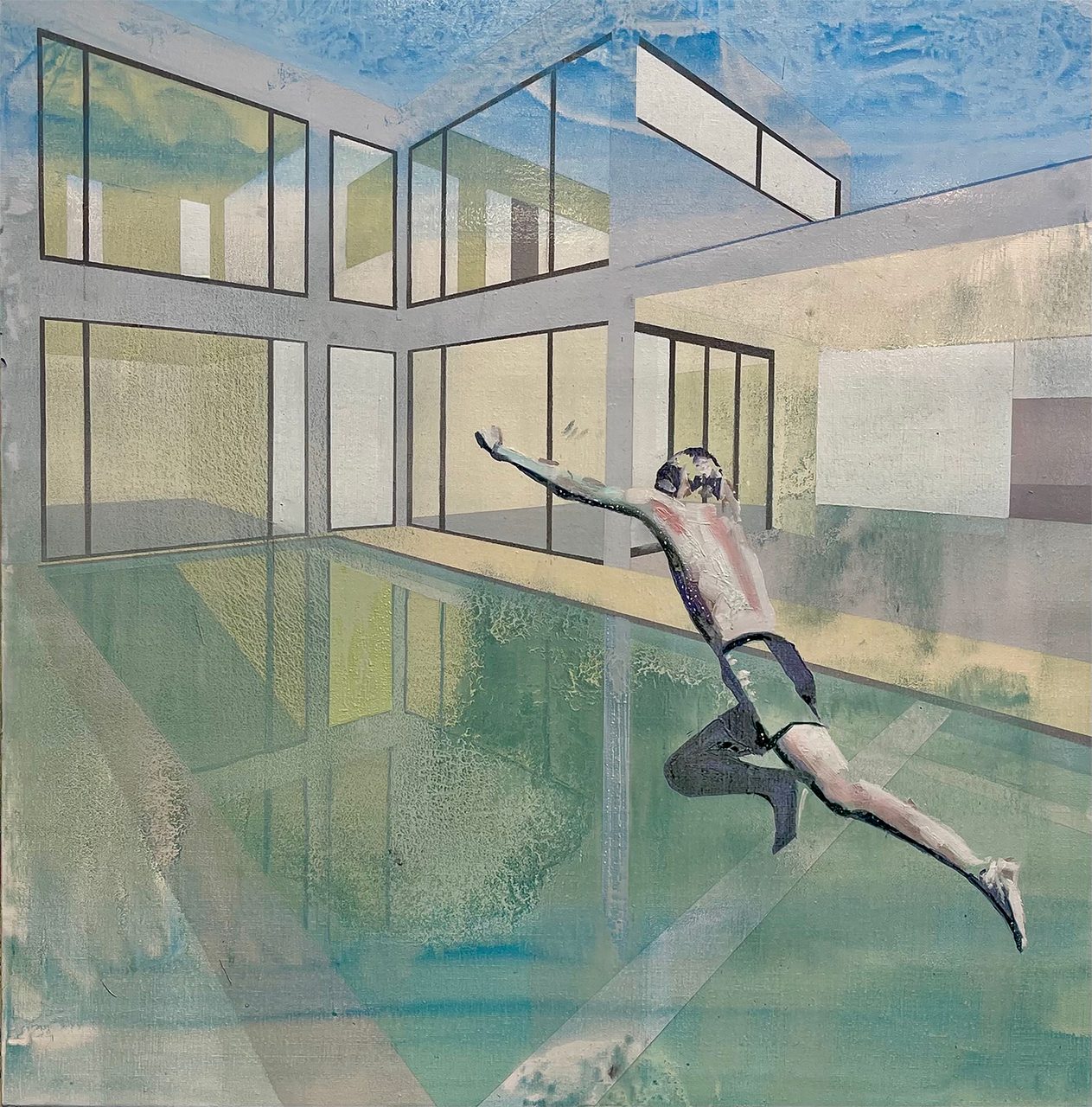
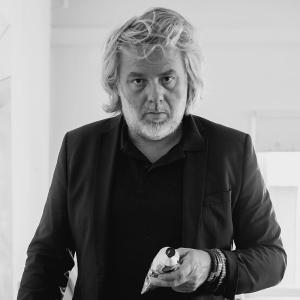
The first Italian solo exhibition of Norwegian artist Kenneth Blom, titled “Fuga,” presents a series of works created specifically for this occasion. Curated by Luisa Catucci and Massimo Scaringella.
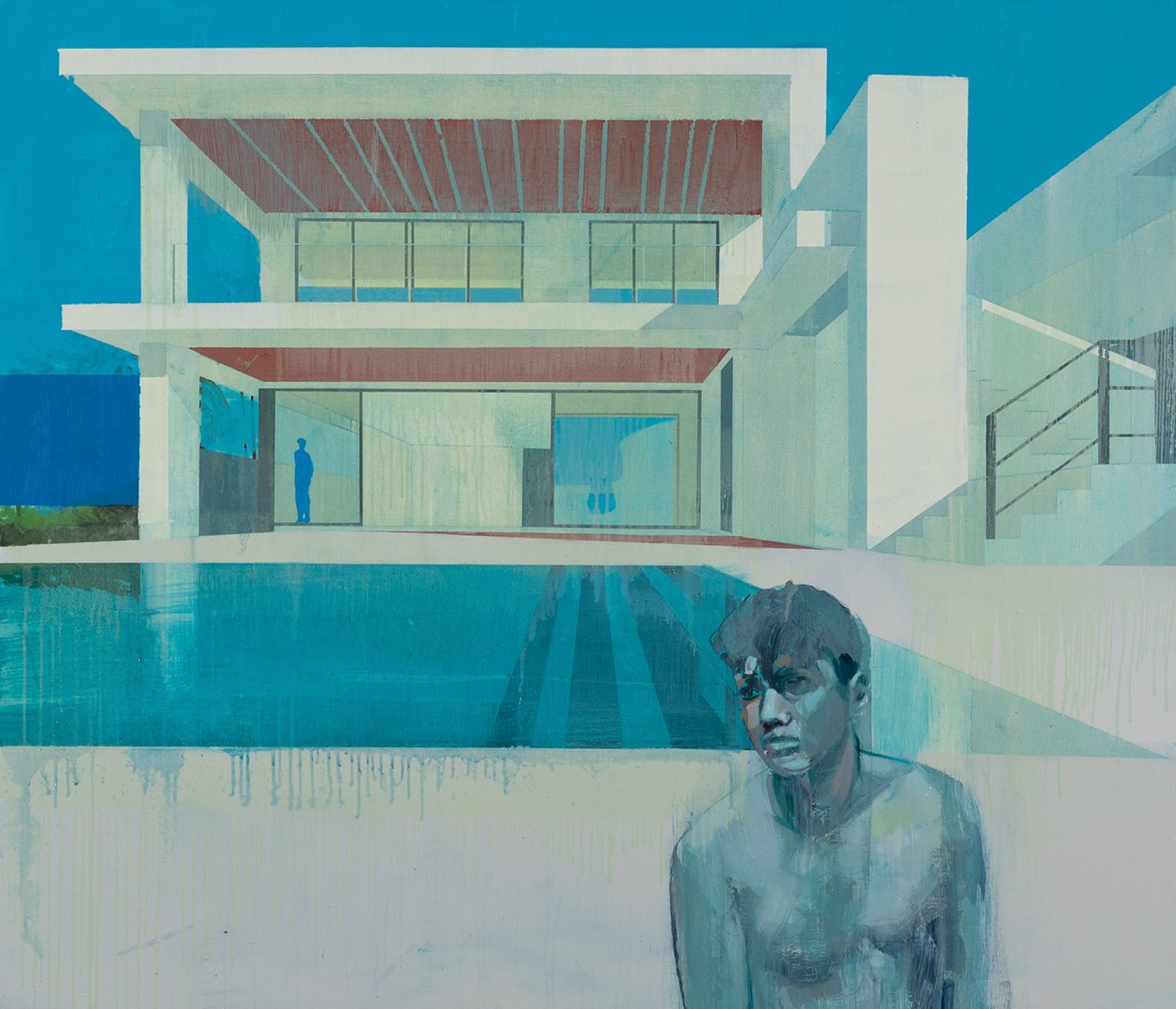
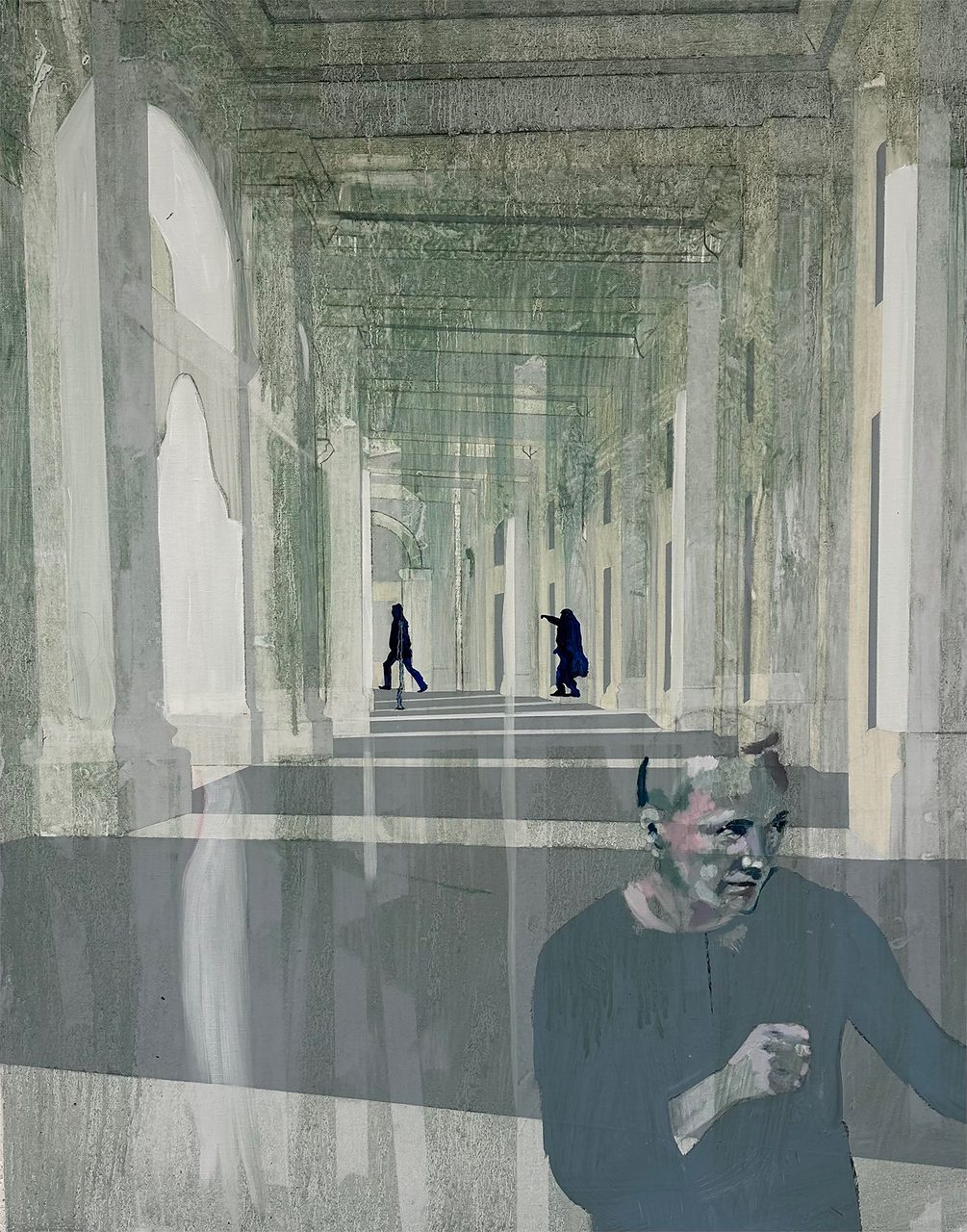
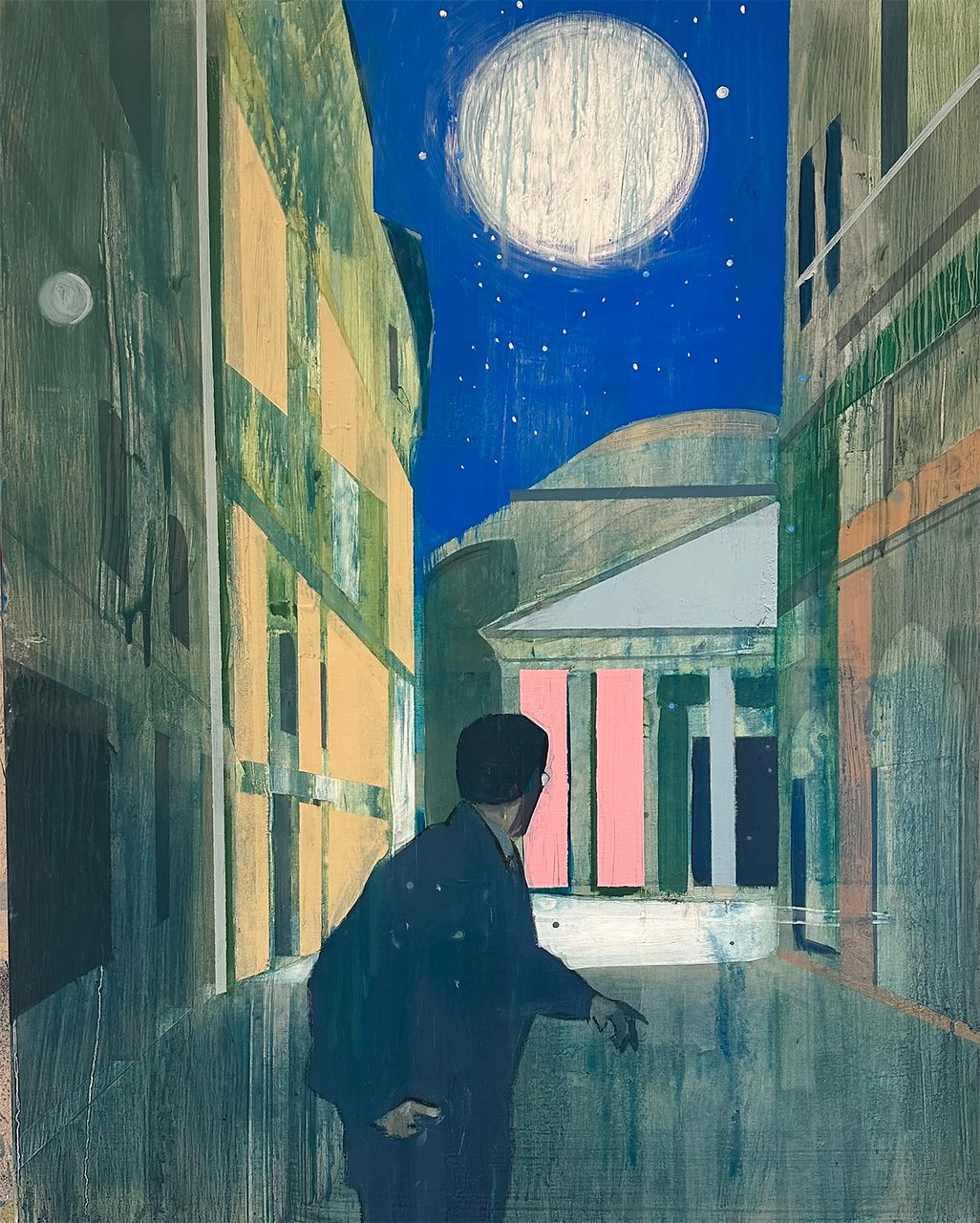
His paintings emit a subtle psychological tension and evoke a latent film noir atmosphere.
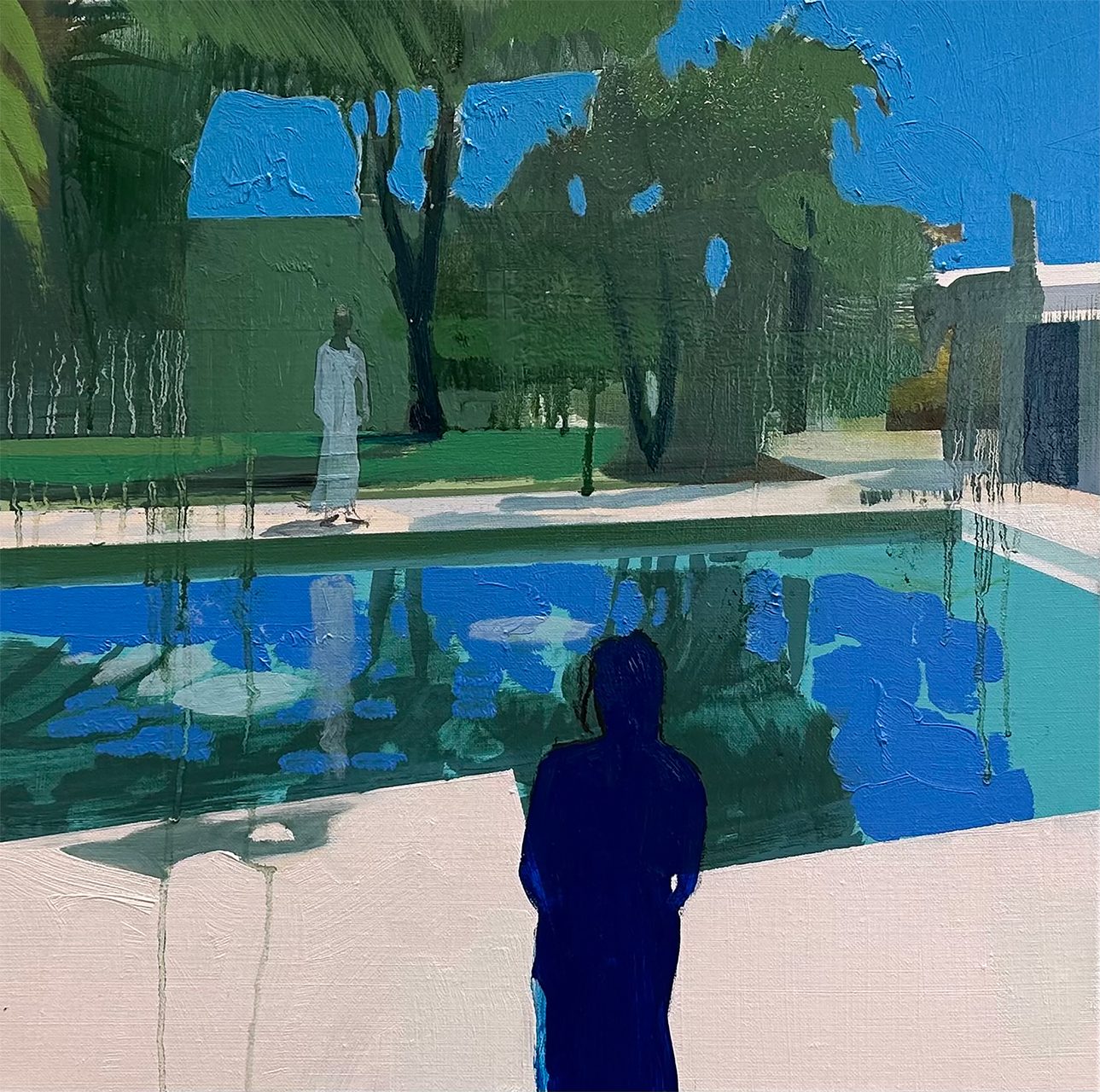
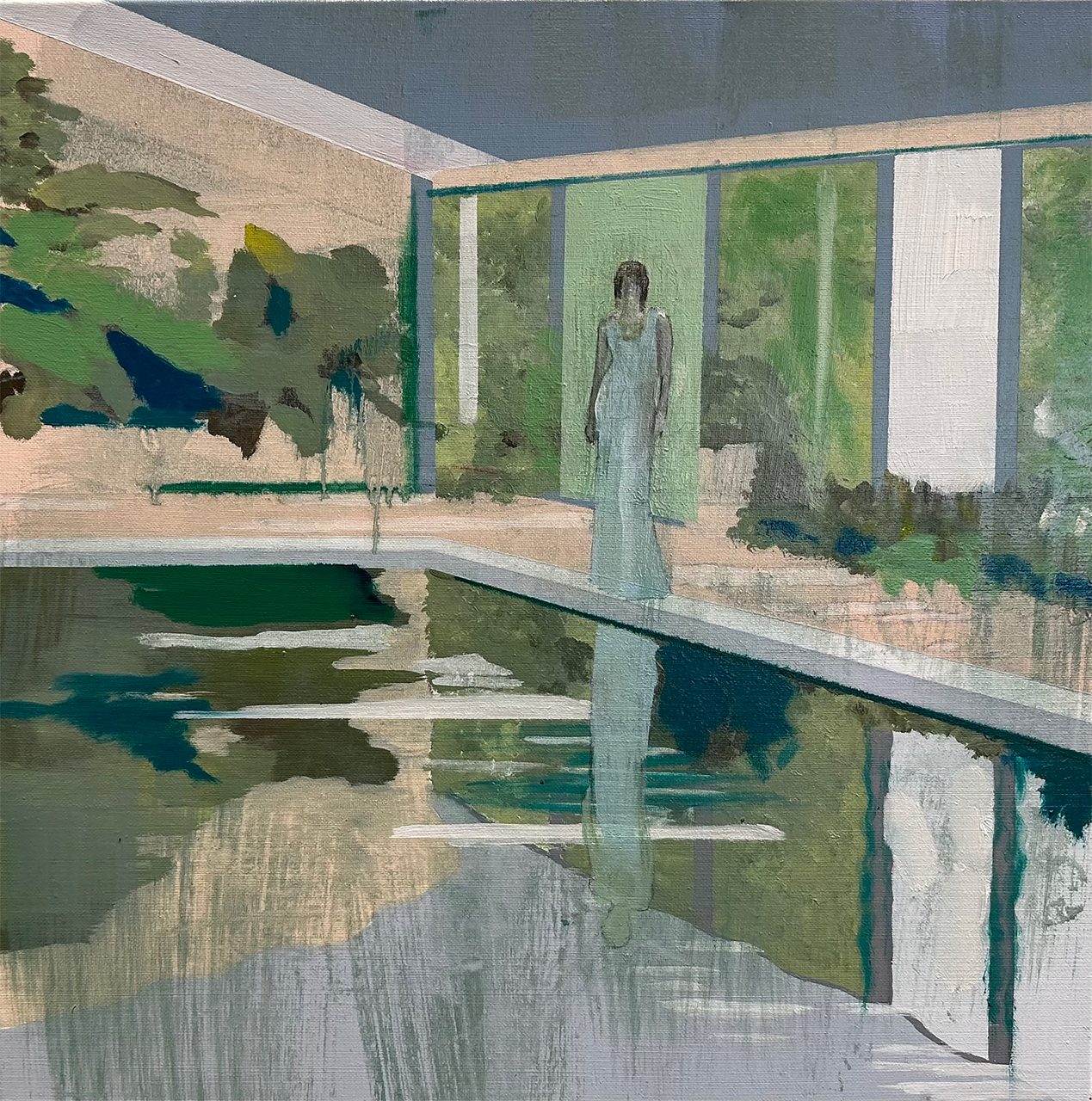
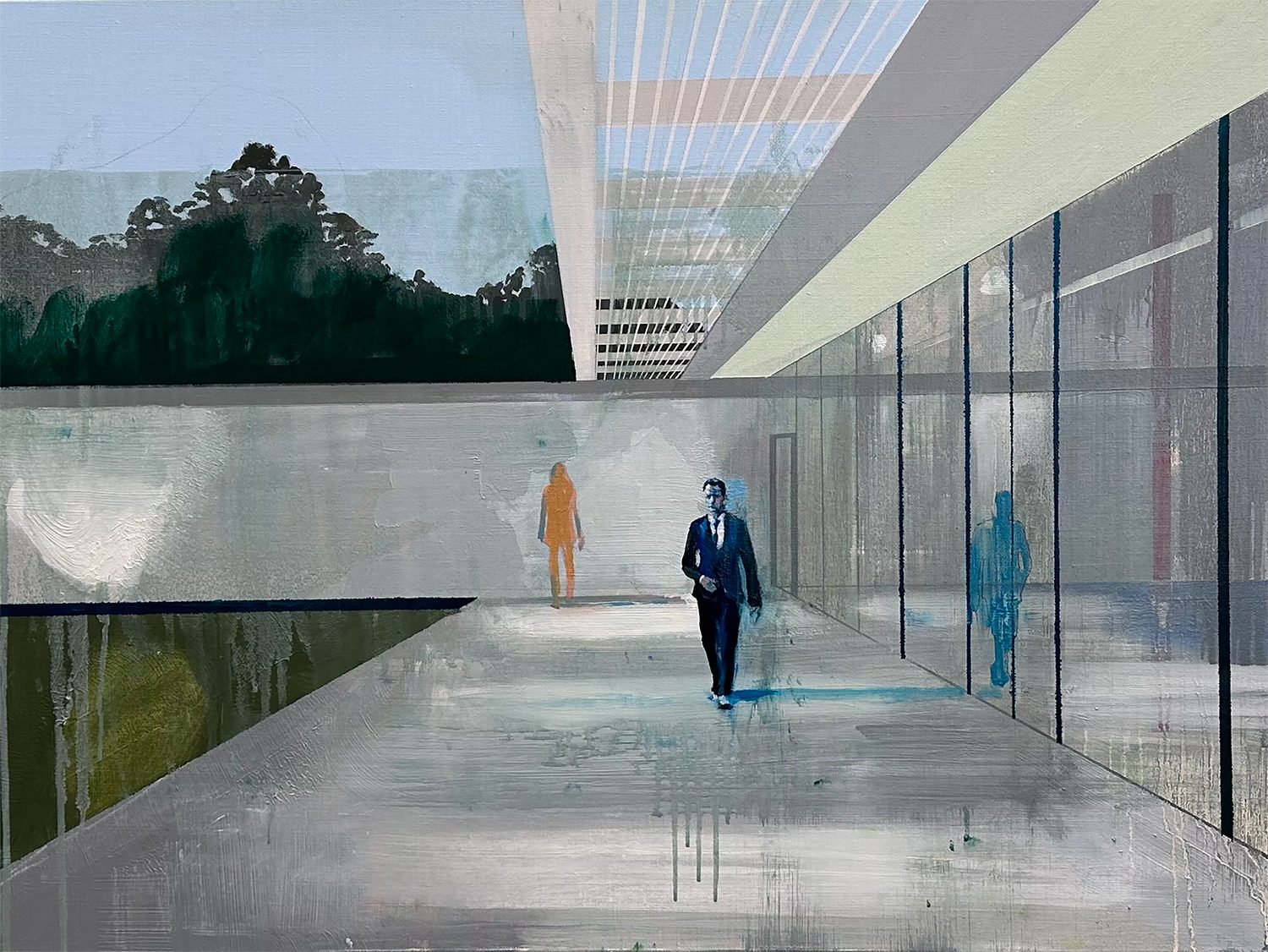
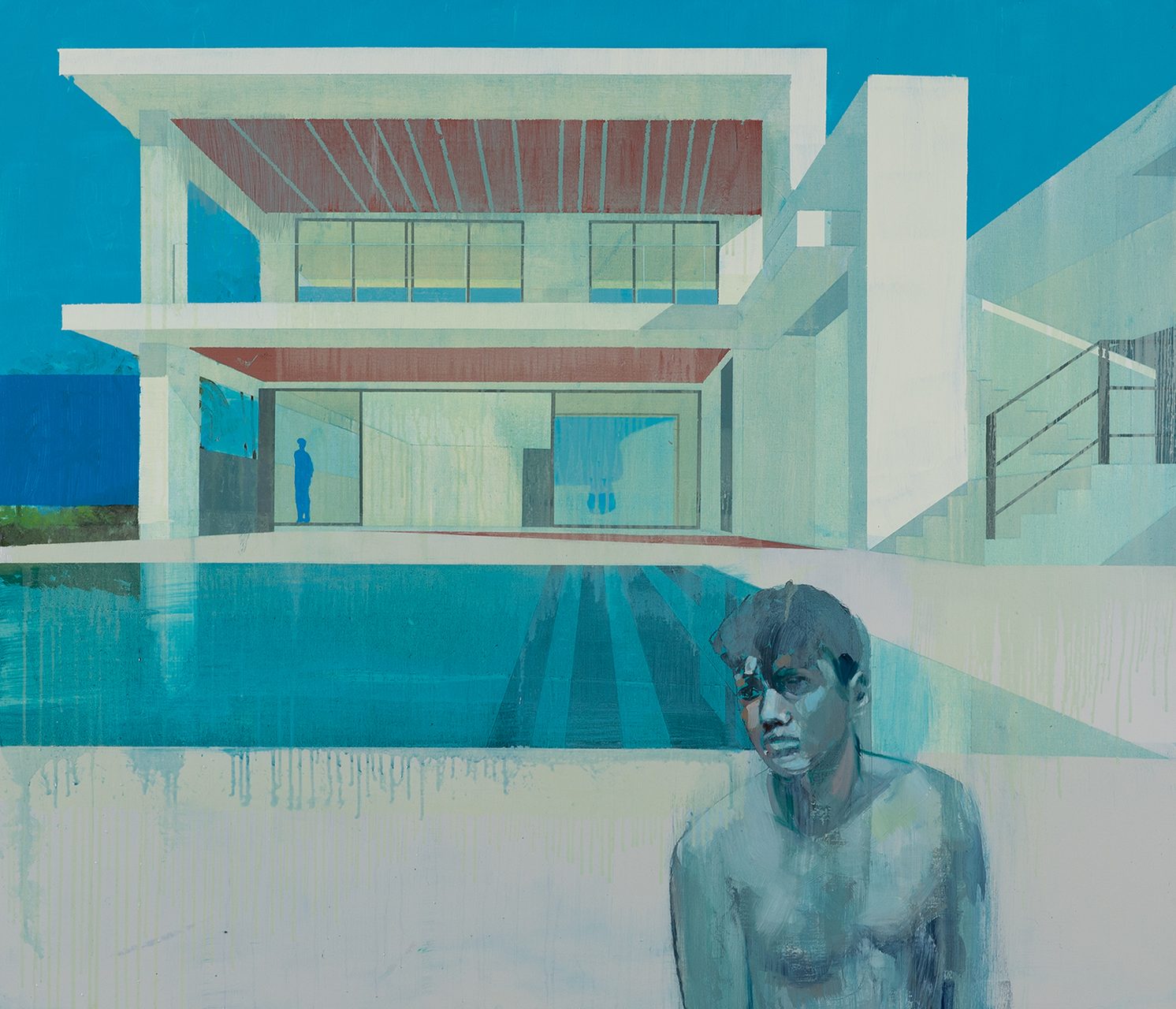
In his compositional approach, Blom skillfully assumes the role of director, using background settings as expressive stages to reveal the human drama within his visual narratives. His canvases blend geometric elements with masterful use of diagonal lines and vanishing points, evoking a strong architectural mood reminiscent of early modernist masters like Mies van der Rohe, Alvar Aalto, Le Corbusier, and Walter Gropius.
At the same time, his artistic intent goes beyond depicting specific environments; it seeks to evoke deep sensations and emotions, setting the perfect stage for his subjects/actors.
The enigmatic figures inhabiting his works appear guided by deep sensitivity, even in moments of stillness.
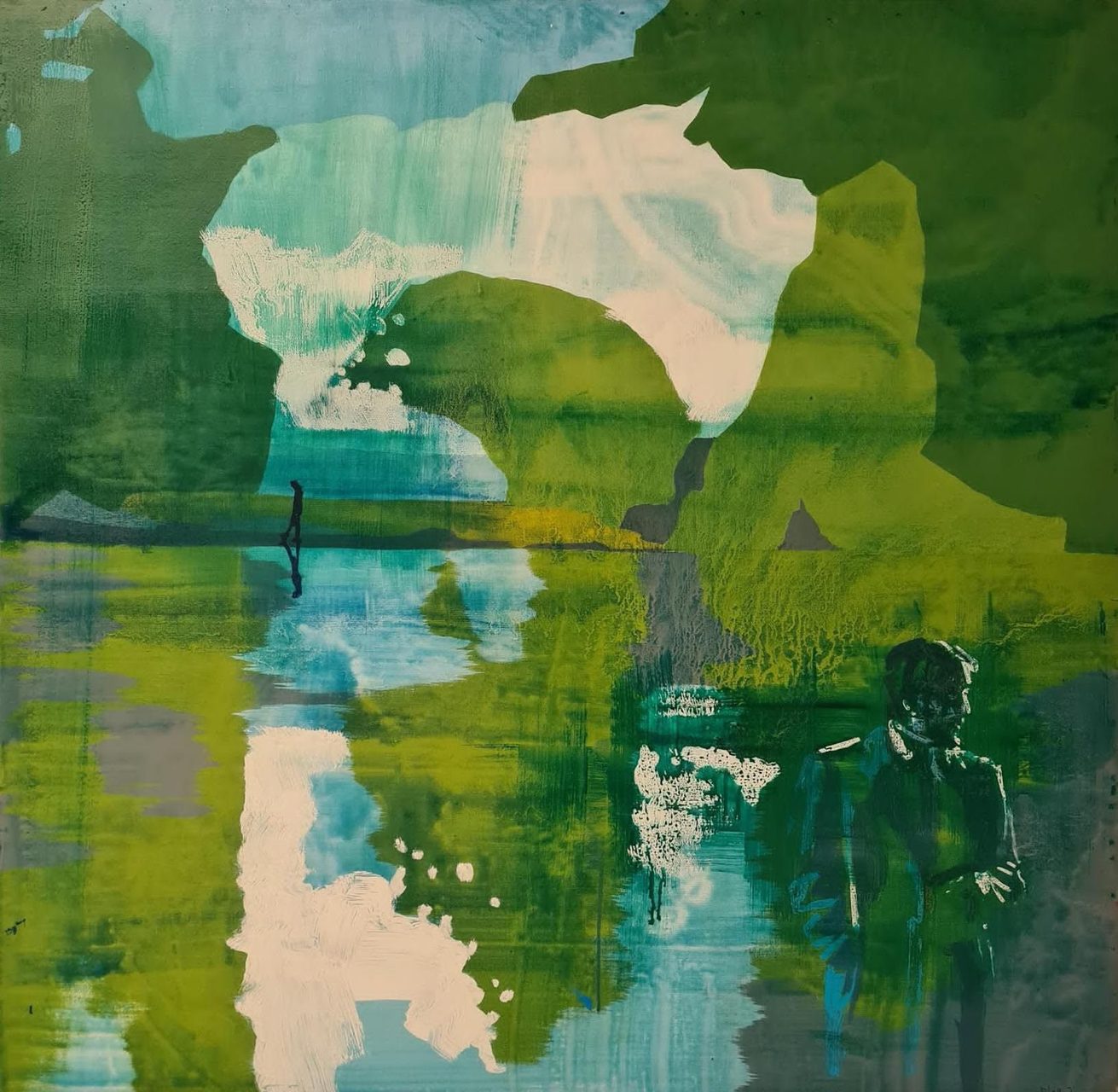
The juxtaposition of abstract and figurative painting—where wild, untamed brushstrokes merge with controlled backgrounds—gives each work an air of mystery, unease, and narrative depth. His characters become archetypes, embodying human psychological conditions and existential obsessions. Drawing from C.G. Jung’s insights, the collective nature of archetypes emerges through coincidences that blend into profound meanings, suggesting that the archetype—or collective unconscious—permeates both the individual psyche and the external world. This archetypal realm, timeless and eternal, captivates viewers confronting Blom’s art.
His pictorial narratives reflect an atmosphere of melancholy and solitude, emphasized by his color choices and solitary or paired subjects, placed in undefined landscapes and non-recognizable architectures. Their ambiguous ethnic, social, and cultural traits enhance the sense of alienation and dystopic perception of modern society, while still evoking universally felt emotions. The transcendent nature of his art avoids specific messages, addressing instead the essence of human nature. His visual language, marked by radical clarity, evolves through a mix of flat and sinuous forms, expressive body distortions, deliberate color schemes, and symbolic architecture—suggesting a cyclical rather than chronological temporality of existence. Thus, his world and the universe merge, creating a communion between man and cosmos.
