Works on display
Artists

Curators

360
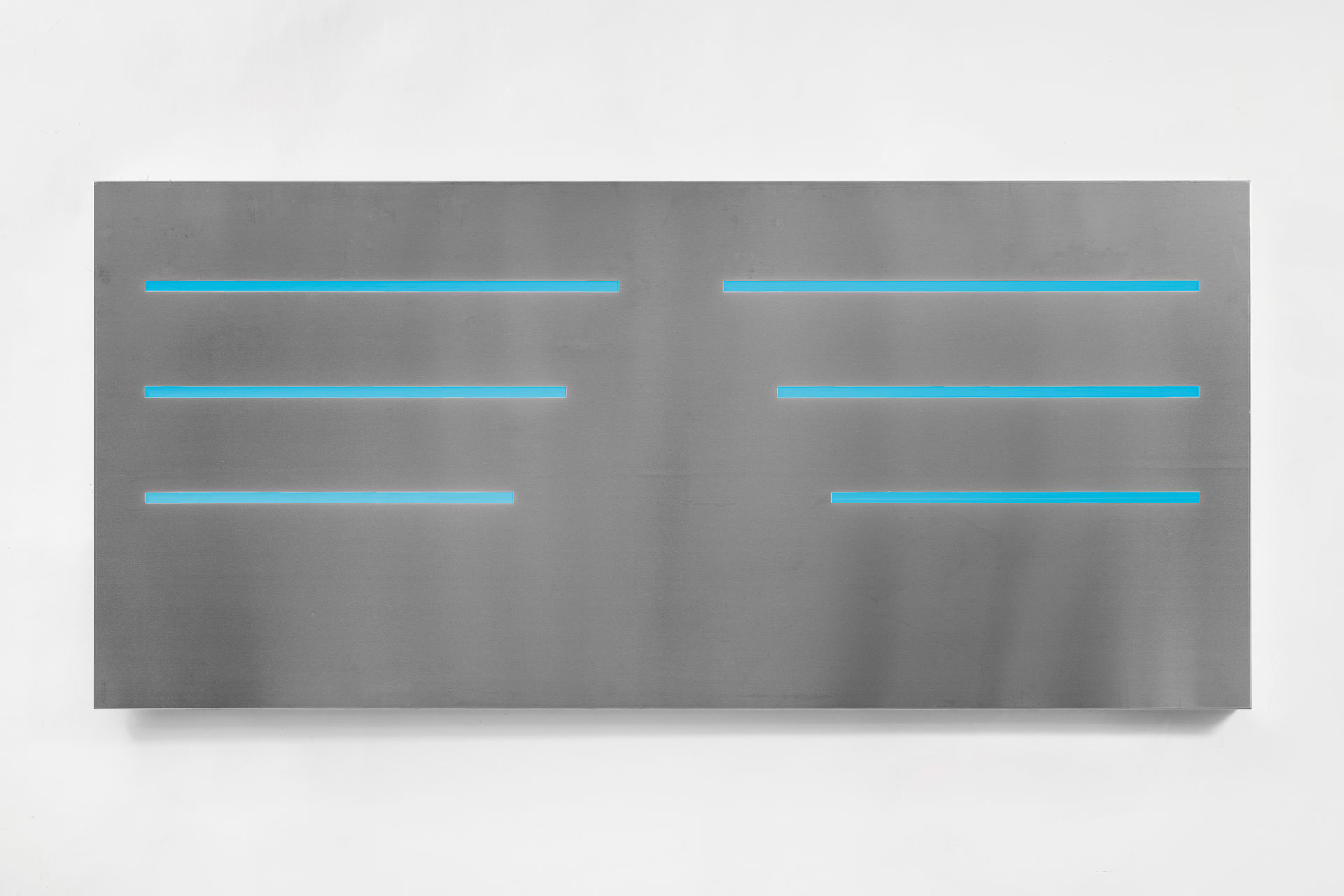
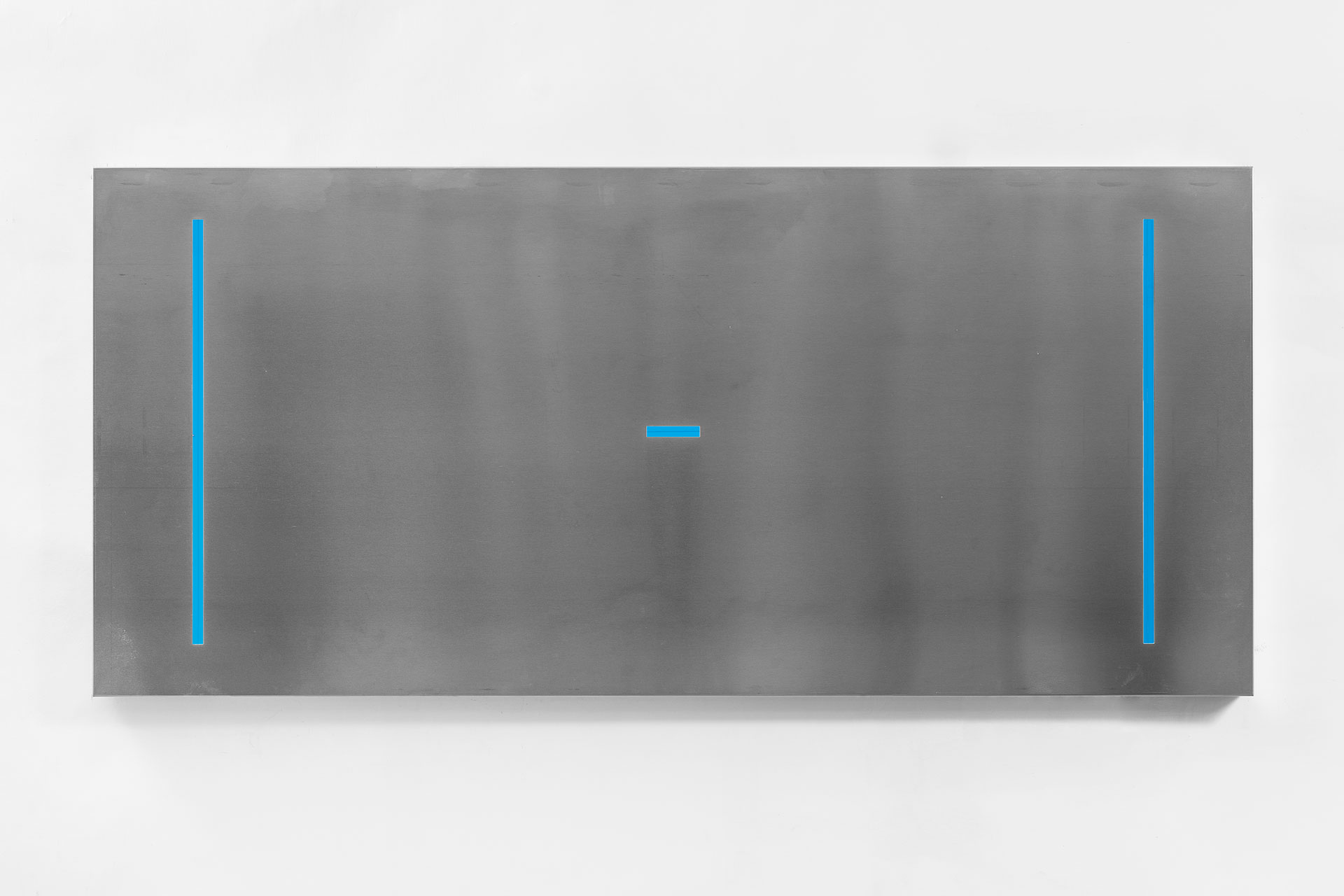
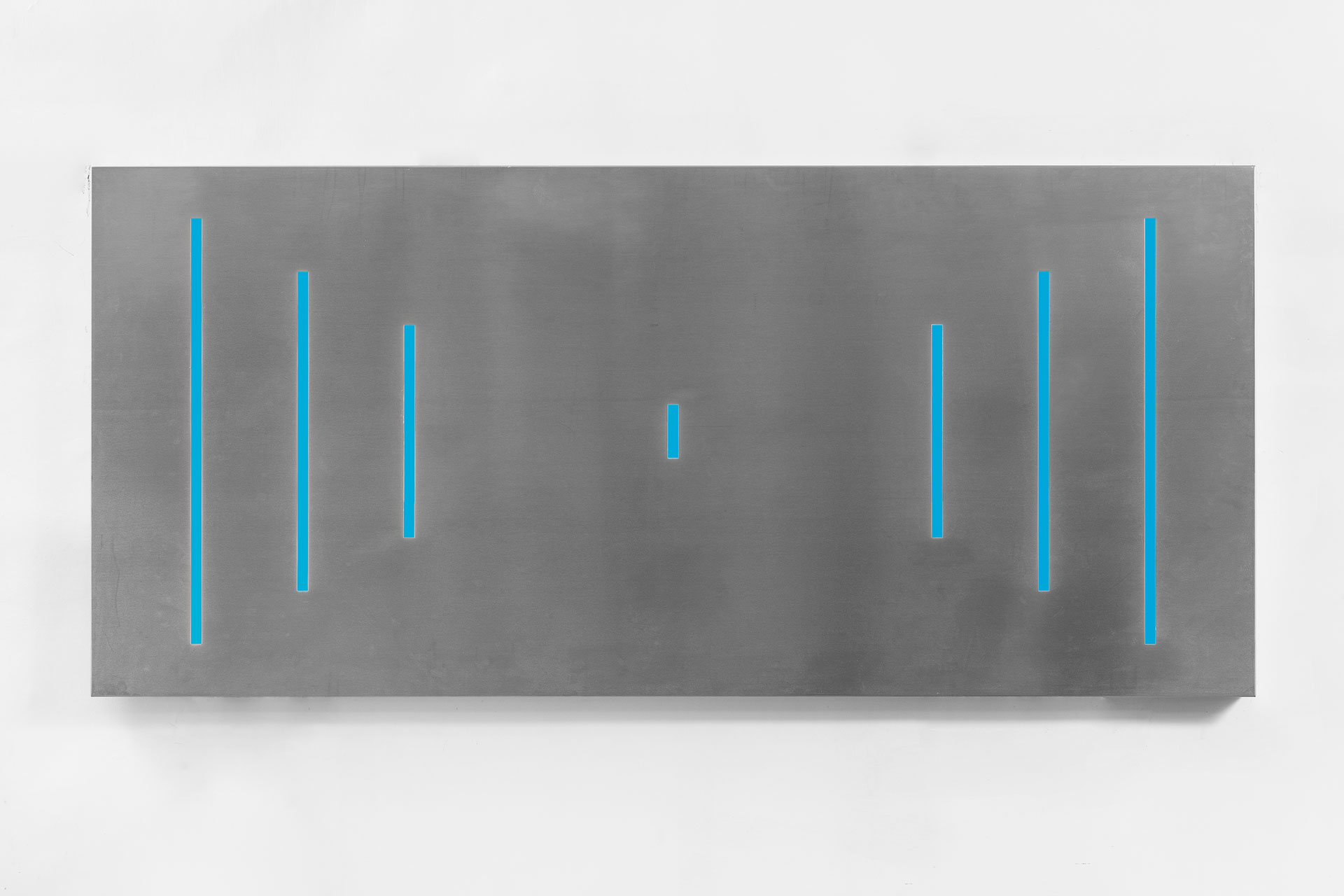
Technological aesthetics and conceptual art: probably the most current challenge and the most difficult combination in the contemporary visual arts scene. This exhibition tackles this challenge through 12 works, with subtle variations and delicate connections that seem to vibrate to a musical rhythm, forming the show “Artificial Horizon,” running from May 5 to June 16.
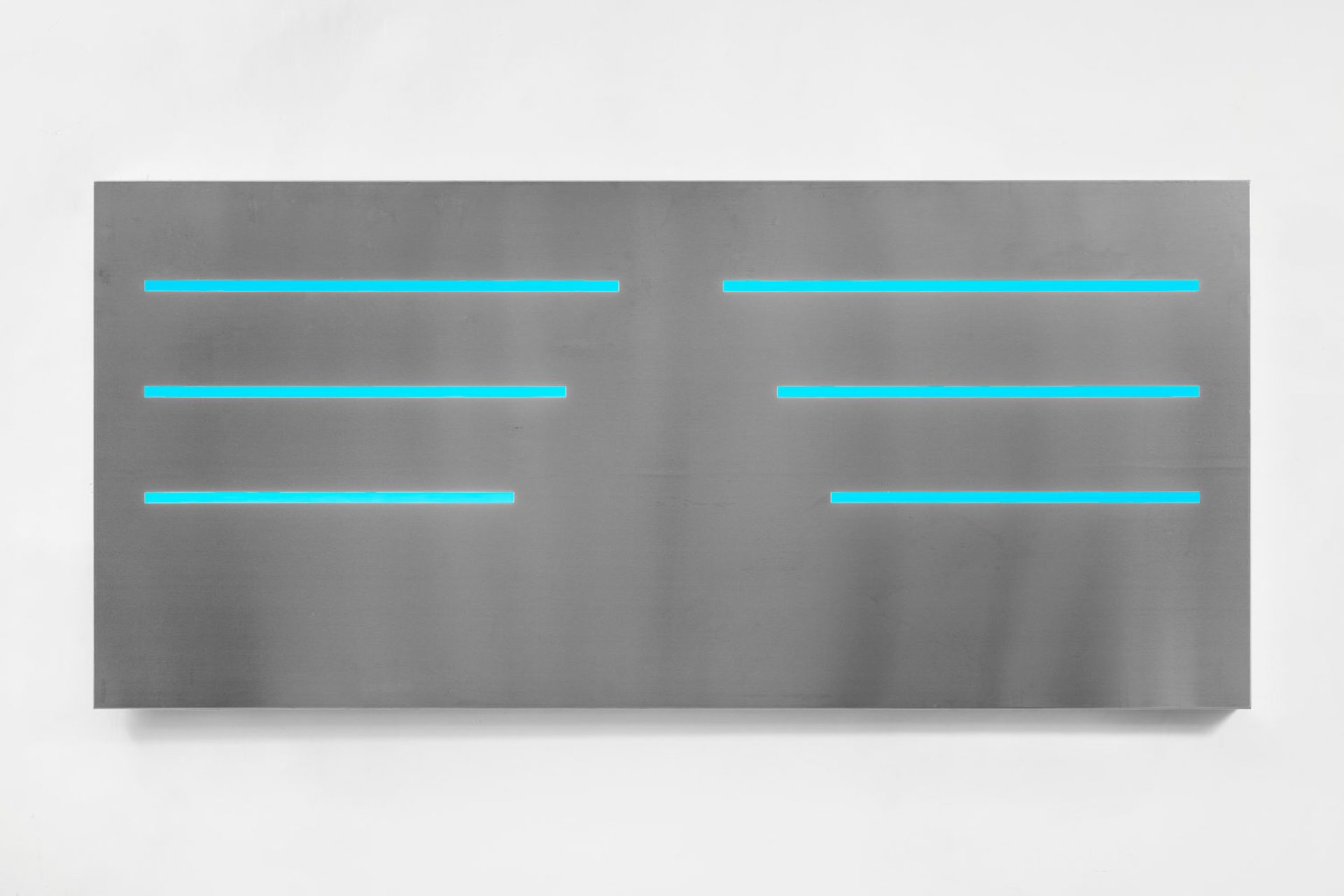
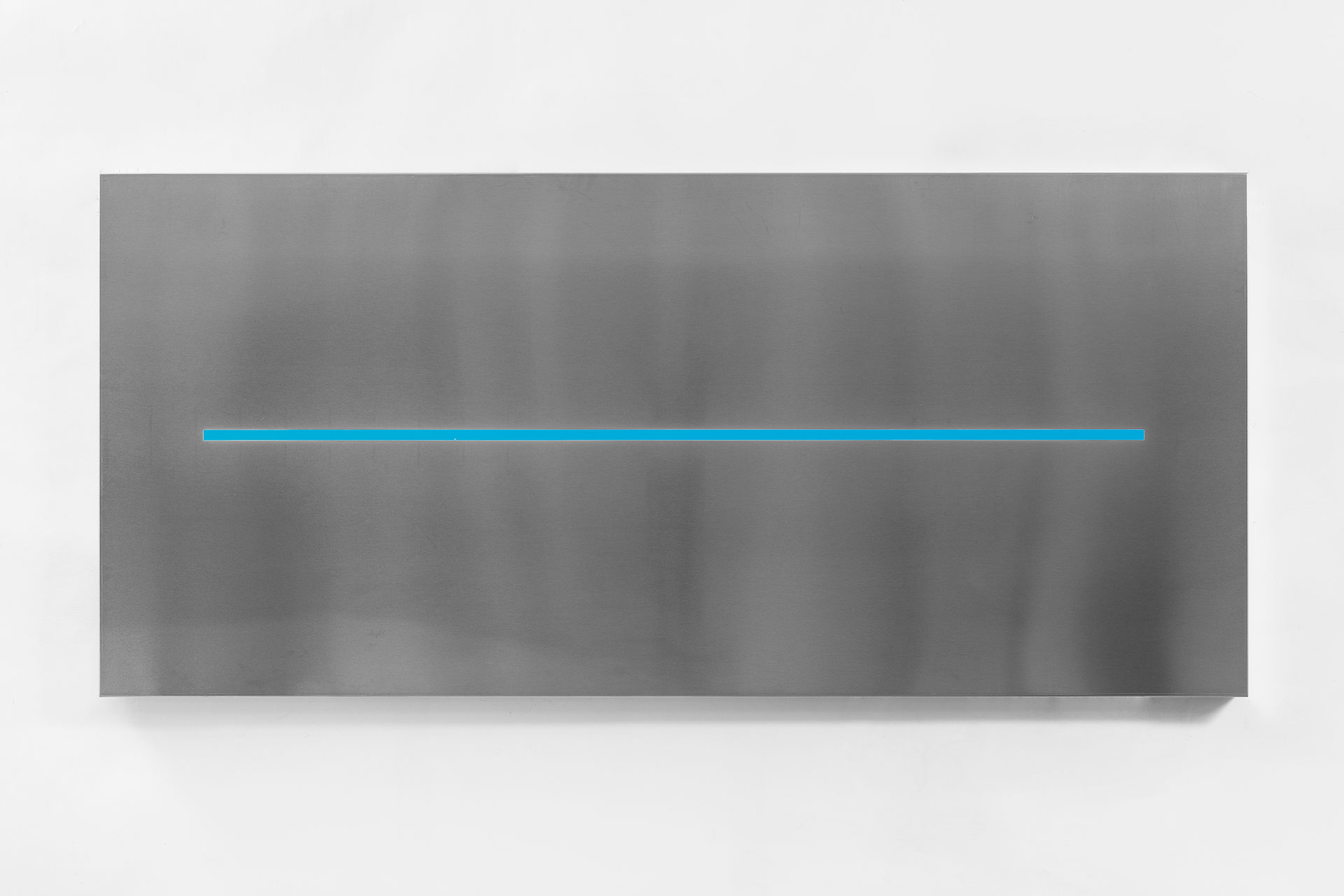
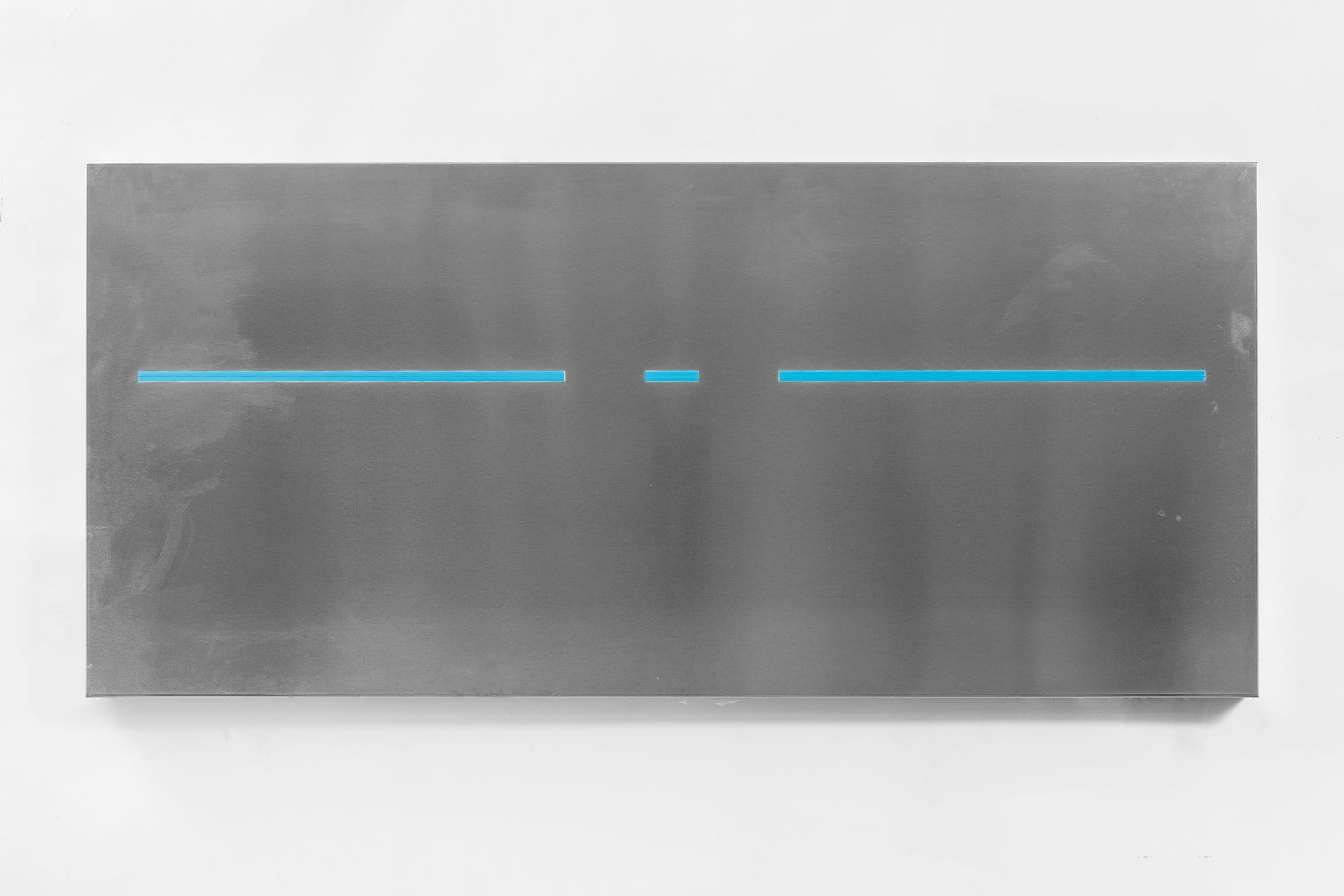
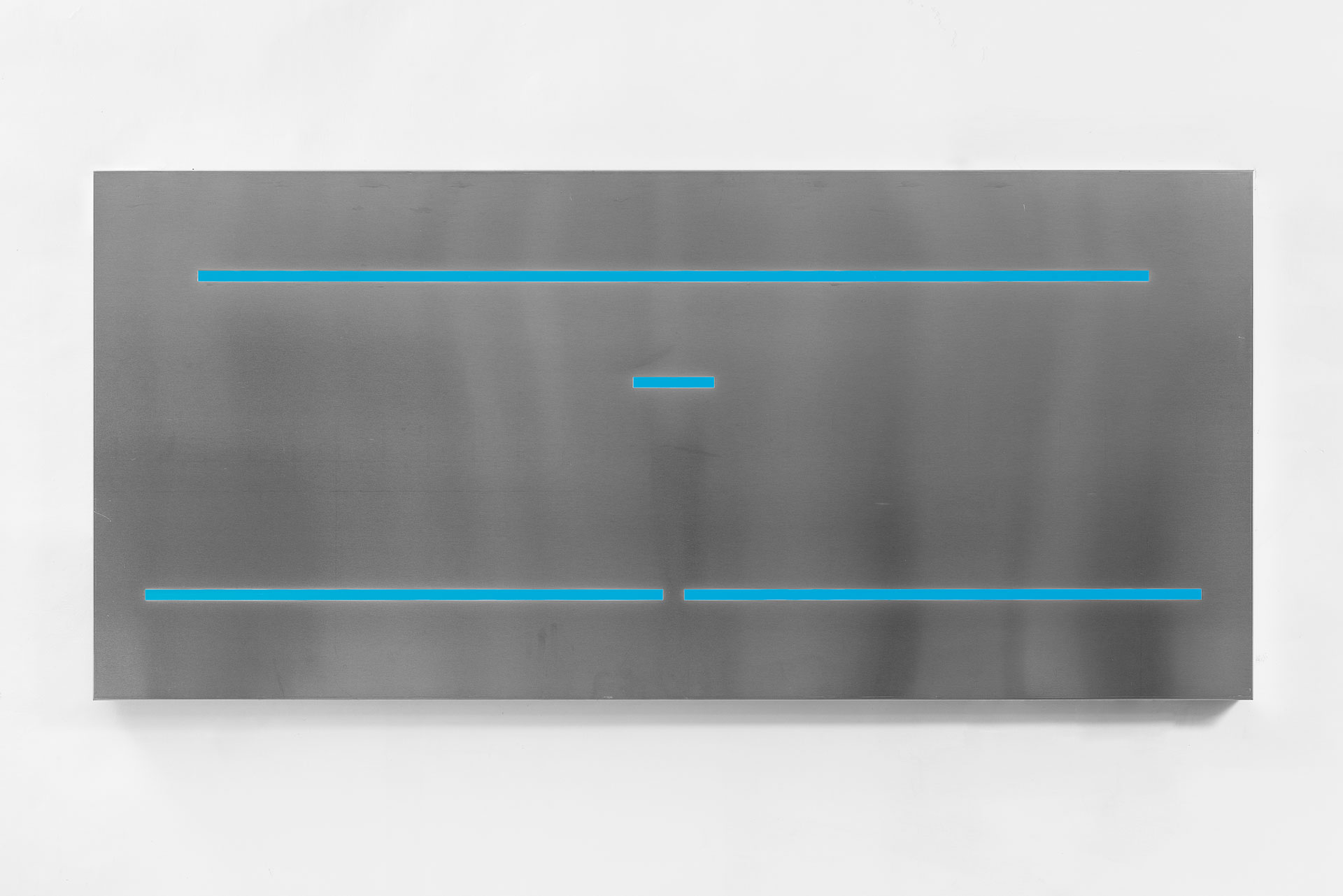
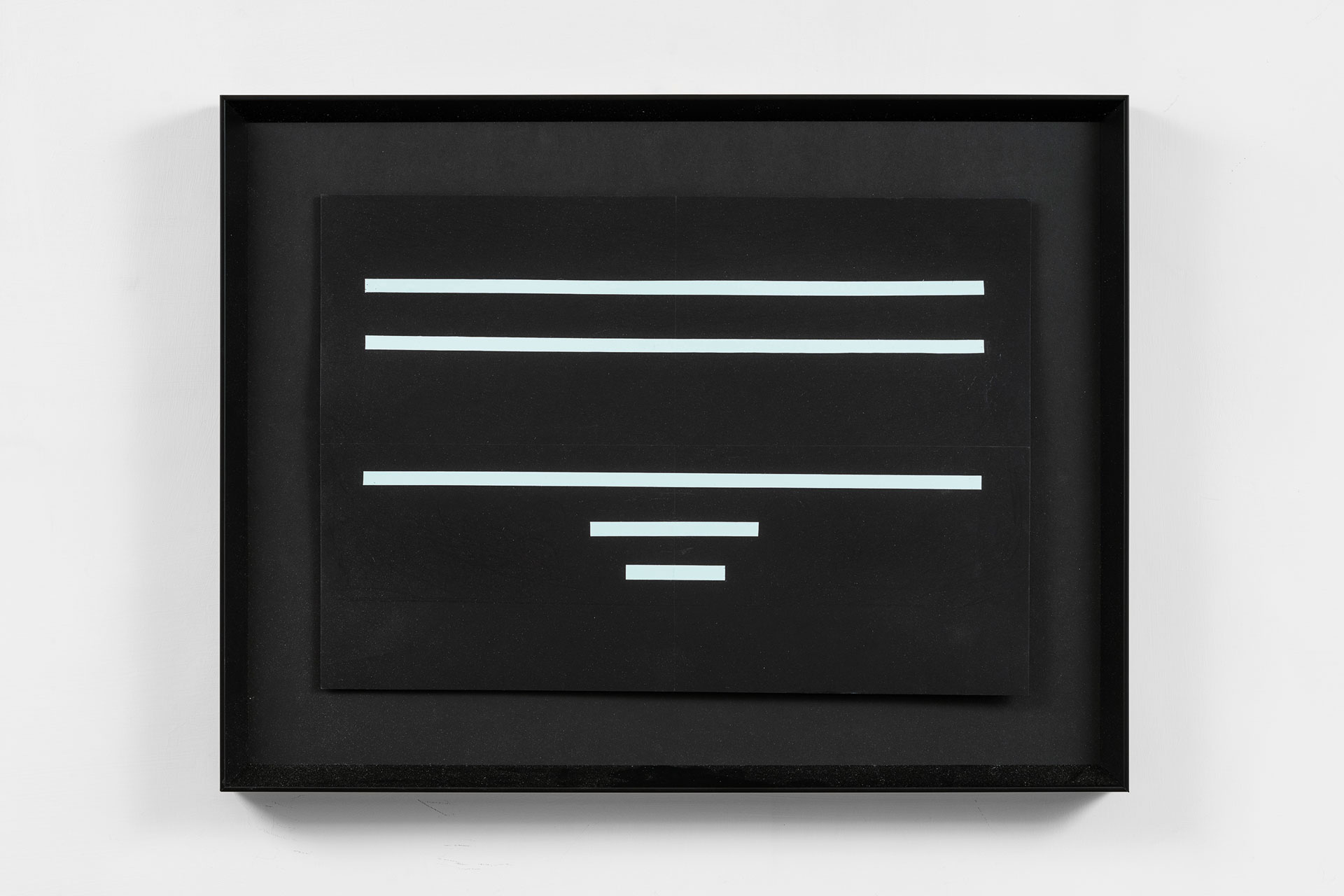
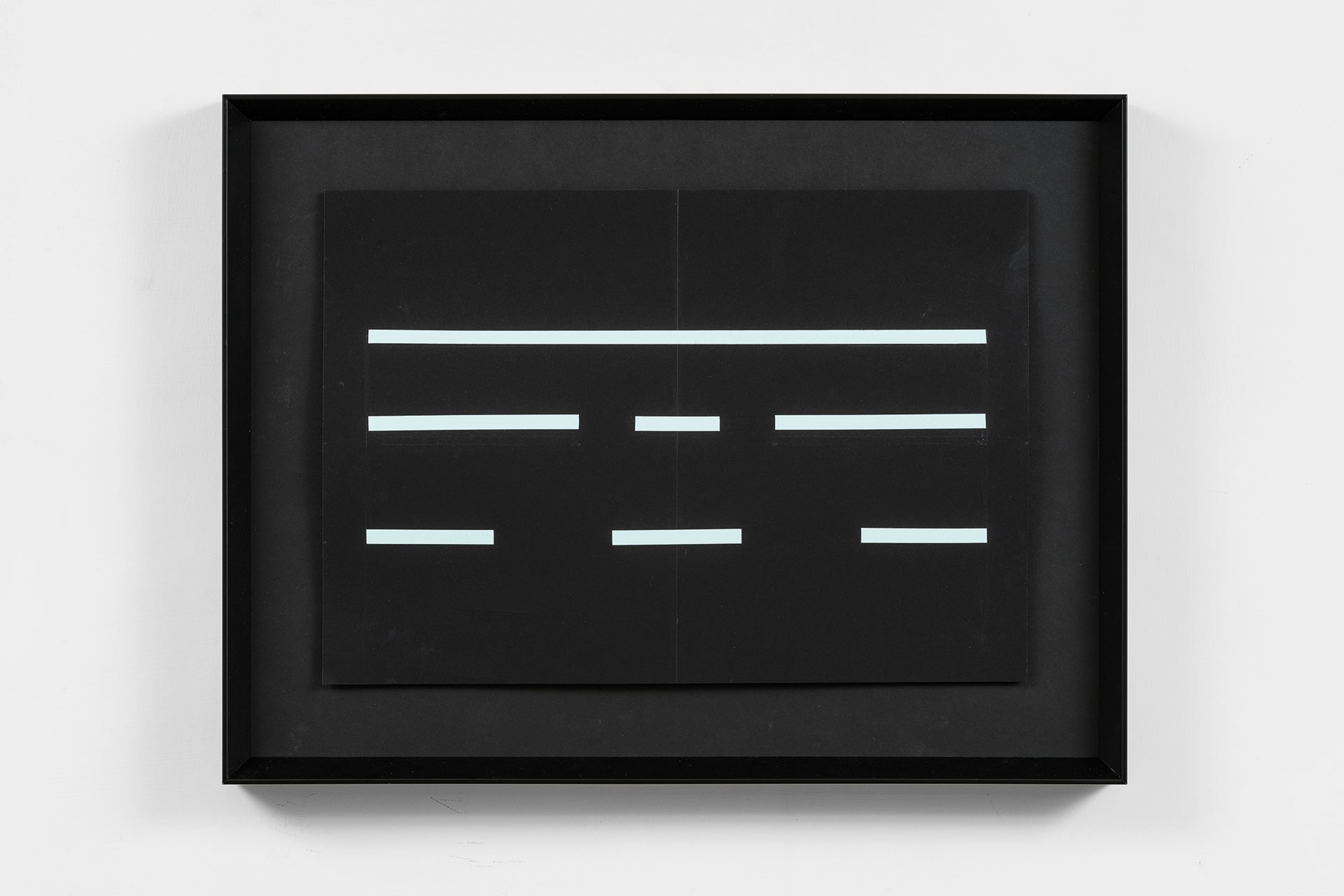
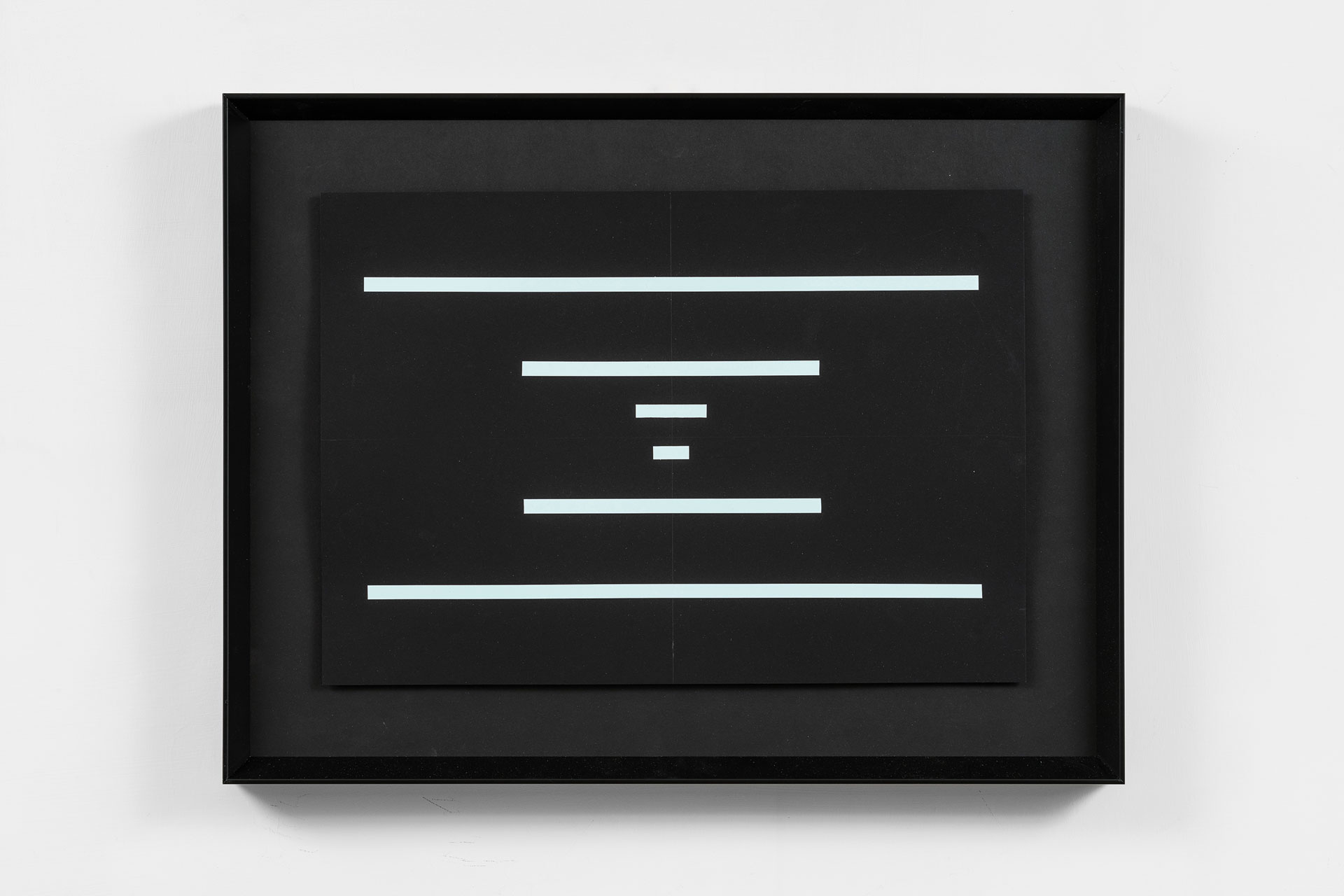
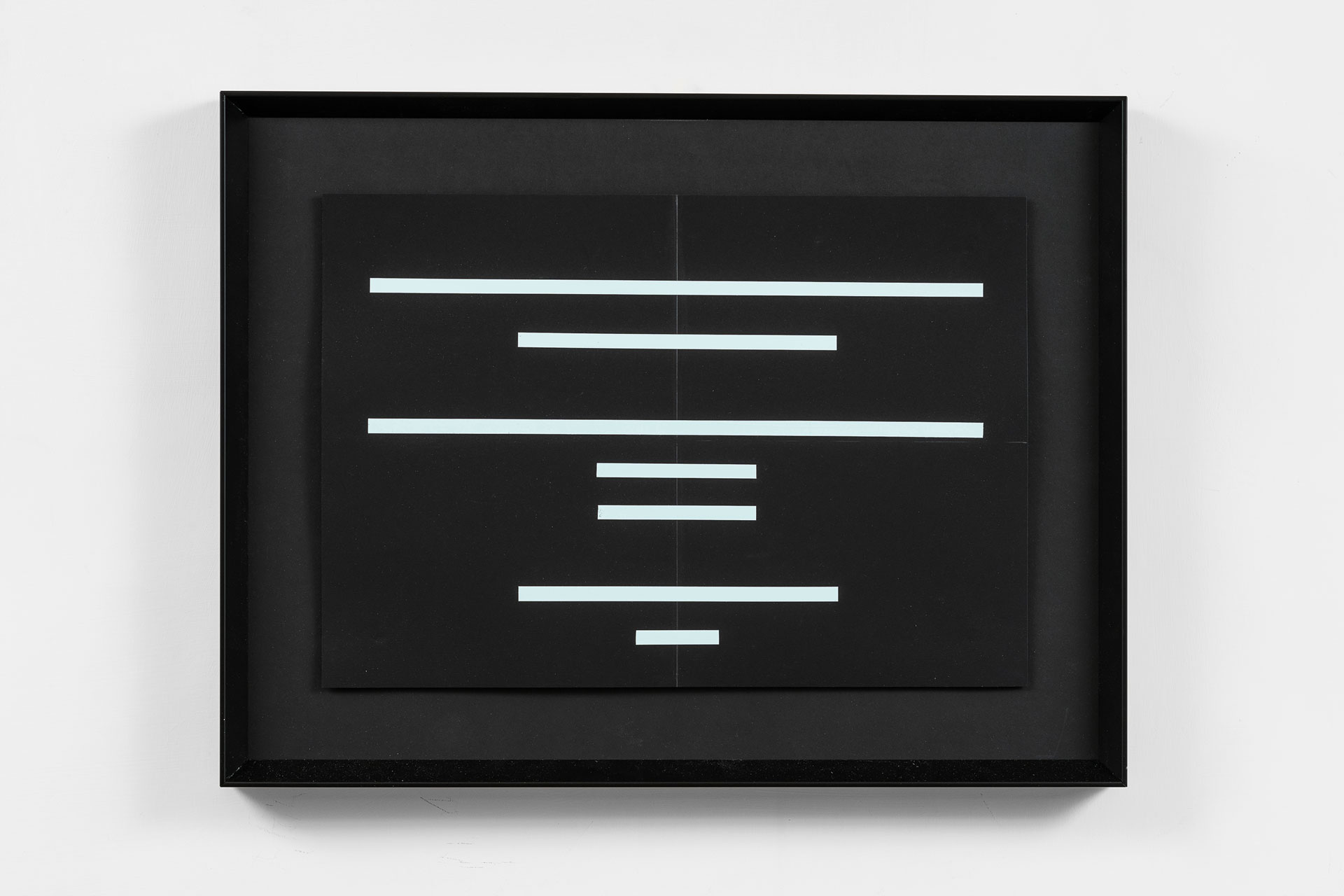
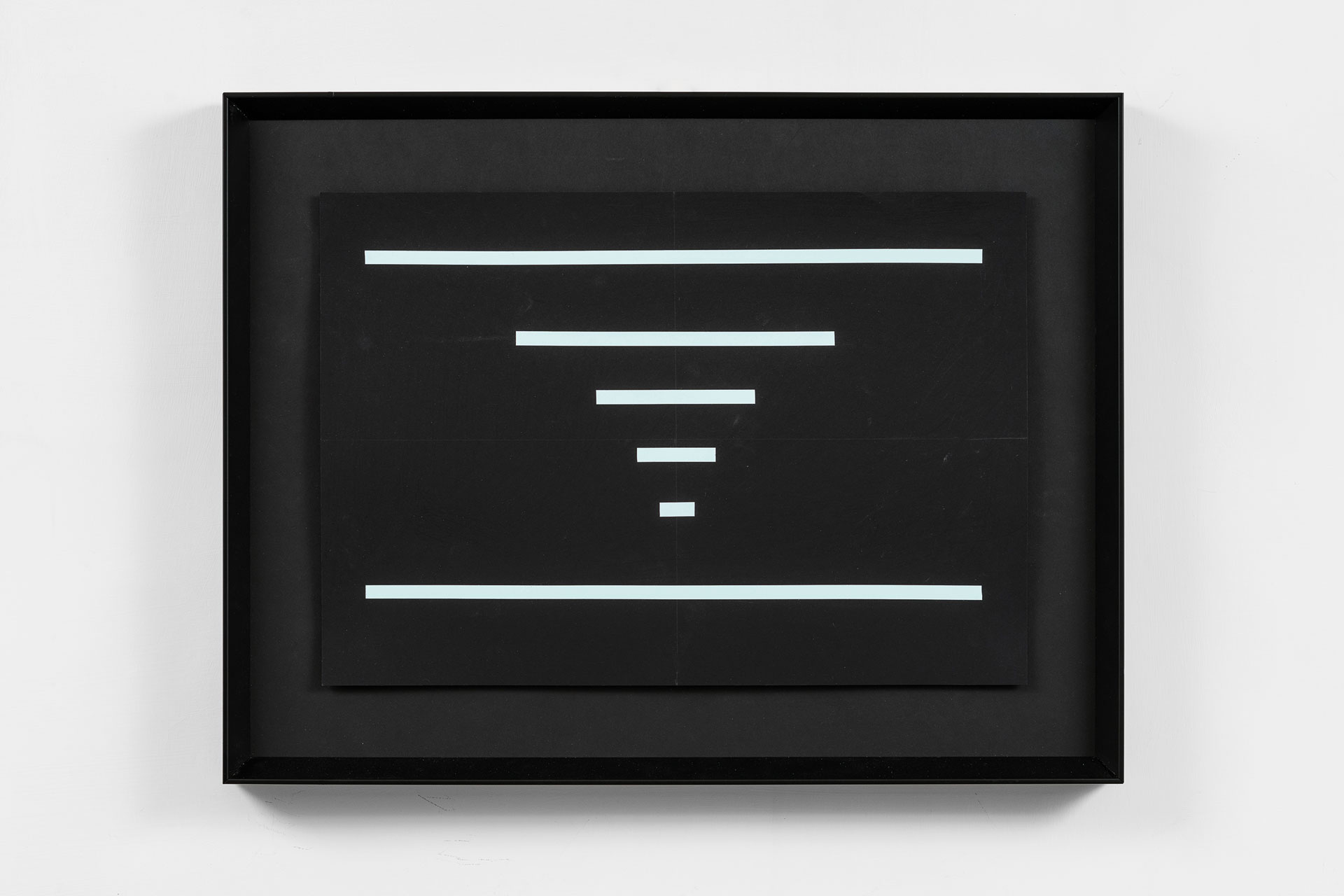
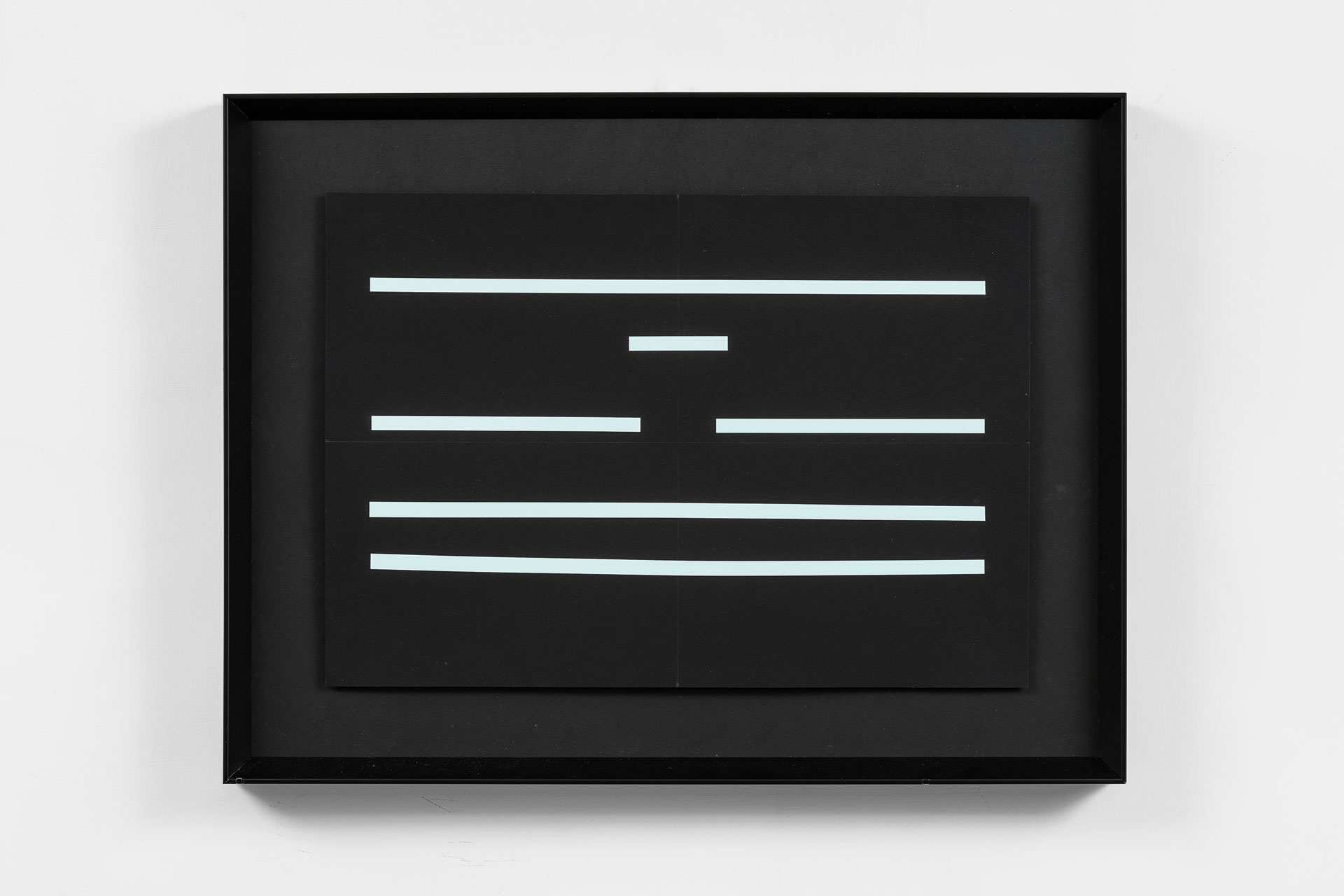
It consists of six large aluminum works using a light tape containing phosphor and silver powder. Electricity illuminates the bands, creating a hypnotic effect. In the smaller cardboard pieces, the artist applies opalescent adhesive strips that, against the black background, create a contrast resembling the larger works.
The references are many: first of all, to the artificial horizon instrument that airplane pilots rely on during flight. The same luminescent tape, a high-tech material, is used for path indicators inside aircraft. “Pilots must have complete trust in this instrument,” the artist explains. His research into aeronautical technology also transcends into a philosophical field, as seen in the past with Fluxus video artists and today with the Japanese collective Dumb Type, featured at the latest Venice Biennale in the Japanese pavilion—an installation suspended between tradition and information technology.
The bright lines crossing the surfaces connect to the trigrams and hexagrams of the Tao and the I Ching—interchangeable lines tracing human destinies across an inner horizon. The horizon is always illusory: that of the senses, of pilots in their cockpits, and even the one suggested in the Chinese hexagrams. The horizon perhaps exists to keep us balanced. With grace and simplicity, as these works suggest, the aesthetic thread recalls the minimalism of Donald Judd and the neon rhythms of Dan Flavin, inviting viewers to reflect, with trust, within their own horizons.
Fabio Sindici
